Formerly the Thinking Catholic Strategic Center
Confirming Culture=Religion+Politics
 |
 |
Scope of Government.
Either limit the scope of government or limit citizen liberty.
Scope of government has broadened so much that there is now little of the living of life that is not subject to regulation.
Vic Biorseth, Wednesday, May 26, 2010
https://www.catholicamericanthinker.com
Our Constitution is a quite short, succinct and easy-to-read document, as you can see in the American Constitution page. That one, brief document, along with its Bill of Rights, is the blueprint for the setup, organization, running and operating rules for the most powerful nation the world has ever seen, in all of world history. As a legal document, there is nothing complicated about it; indeed, it is very simple. If you are reading and understanding these words, then none of it is beyond your ability to read and comprehend.
Article I lays out for us the Legislative Process, describing our two Houses of Congress, their makeup, their members, their rules of election, service and operation, and their powers. Section 8 tells us what they are to do – a description of their official responsibilities.
Article II lays out for us the Executive Process, describing our President and Vice President, their offices, their rules of election, service an operation, and their powers. Sections 2 and 3 tell us what they are to do – a description of their official responsibilities.
Article III lays out for us the Judicial Process, describing our Supreme Court and inferior courts, their jurisdiction and their responsibilities.
The Bill of Rights establishes limitations on government protecting certain American citizen rights, which are not granted by government, but by God, as described in the American founding document, the Declaration of Independence. Most specifically, these rights involve freedom of religion, speech, press, assembly, petition of government and gun ownership. These are rights we already had and they were not granted by government; rather, government is prohibited from interfering with them or hindering them.
Note that there is nothing in the Constitution regarding any increase in government control in any area, or of limiting citizen liberty, or of collectivization or redistribution of anything. Those things were born in another document titled The Communist Manifesto and they are directly opposed to the makeup, organization and operating rules of the United States of America.
Nor is there anything about government attacking such problems as illiteracy, childhood obesity, healthy eating habits, smoking, producing carbon, etc. Nor is there anything about government requiring private enterprises to produce products such as cars with special airbags, or built-in “crushability”, or any particular fuel-mileage requirements, etc.
Today we have not only high ranking bureaucrats, but our President, instructing us on the proper way to cough or sneeze, while pushing another false “emergency” regarding a completely bogus influenza “pandemic”. You could be written up for sneezing into your cupped hand instead of your sleeve, if you are seen doing it. This stuff happens at state and local levels, too. In some places, government requires the local mom and pop diner to put the calories-per-serving beside all the specials listed on the black board, or on all menus, if they have printed menus. There is no end to it.
None of this is the proper business of government.
We have no need for any Surgeon General of the United States, or of any bureaucracy beneath that title or function. Medicine is not the business of government. If it isn’t in the Constitution, what is its justification for existence? Pork? Political payoff? Reward for services rendered? Opportunity to grow the government and increase government reach?
Our government has no business “donating” our money to support such abominations as the National Endowment for the Arts (NEA.) If art is worth a dollar, someone will pay that dollar, as fair market value. If art – or blasphemy – is not worth a dollar, why should the tax payers be forced to pay that dollar? Art can stand on its own whenever and wherever there is a market for it. If an artist cannot sell a Madonna with feces on it, or a crucifix in a jar of urine, then he richly deserves the title Starving Artist. If he cannot sell his work in the free and open marketplace, the tax payers should not be his safety net. There is nothing special about art. Lots of real artists are quite rich. Fakes are not worthy to be recipients of any involuntary redistribution of other people’s money.
The wonderful thing about America, as founded, is the existence of a strictly private sphere of activity beyond the reach of government. We call it opportunity. So long as we do not defraud or cheat, we are free to act in this sphere completely free from any control or any interference from government. This stems from the natural right to private property. This basic, fundamental human right is implicit within the Commandment “Thou shalt not steal” and it guarantees the right of an individual to ownership of something. If he owns it, he has certain rights over it, and no one can take it away or damage it.
Walter Williams, the professor/economist/philosopher of note, has pointed out that some or most of these intrusions into this private sphere of citizen activity as violations of the human right to private property. He illustrated the point by talking about smokers and smoking. My body is my property; so is my health. If I choose to smoke, that is my choice, and no one else’s choice.
The notion that smokers hurt health insurance costs for everyone is bogus. Insurance companies have no problem denying claims for high risk customers. If you die sky diving, of scuba diving, or hang-gliding, guess what – your life insurance is going to deny your claim. It would be just as easy for a health insurance company to deny a lung cancer claim of a smoker. Similarly, it would be just as easy for a car insurance company to deny a claim of someone who did not use a seat belt and was thrown from a car and injured or killed.
At a higher level, my house is my property. If I want to allow smoking in my house, that is not the business of government. If I own a restaurant, and I want to allow smoking in my restaurant, that is not the business of government. If I own a business, and I want to allow my workers and customers to smoke, that is not the business of government. The private sphere of private citizen activity free from government control or interference is shrinking down to nothing.
Now, I am not a smoker, at least not for the last 35 years or so, and I have now hit the point where cigarette smoke bothers me. However, Walter Williams is quite correct. It is astounding how American smokers seem to be just rolling over with every new wave of restrictions on where and when they can smoke, and on ridiculously higher and higher taxes imposed on cigarettes in hopes of driving usage down, but in the real world, feeding cross-county and cross-state black markets in cigarettes.
A thing such as tobacco, or liquor, or drugs, should either be legal, or illegal. If a substance or product is legal, then there should be no restrictions on it and no special usage or punitive taxes associated with it. The only restrictions on alcohol and tobacco that I am aware of involve age of majority. I wonder why we even have a police agency titled ATF, or Bureau of Alcohol, Tobacco and Firearms. Alcohol is legal, tobacco is legal and firearms are legal. So why does the ATF exist? To check IDs at the retail counter?
We need to get government back to doing what it is Constituted to do. If they would pay more attention to the budget, that would be nice. I really believe that what Rush and Sean say is quite correct: we now have professional politicians who make their living and ensure their job security by spending other people’s money. And they do that by growing government, not shrinking it, which, again, is more in tune with the Communist Manifesto than the American Constitution.
God help us.
Sarcastic Acronym Hover-Link Footnotes: For the convenience of those readers using devices that lack a mouse, these footnotes are provided for all webpages, in case any webpage contains any hover-links. (If you don't have a mouse, you can't "hover" it over a link without clicking just to see the simple acronym interpretation. Click any footnote link to see the acronym and a detailed explanation; "Hover" the mouse over it just to see the simple interpretation.)
SLIMC1 Secularist Liberal Intellectual Media ComplexGESGOEAEOT2 Gradually, Ever So Gradually, Over Eons And Eons Of Time
PEWAG3 Punctuated Equilibrium's Wild-Assed Guess
TTRSTF4 Them There Real Scientifical-Type Fellers
TTRSPTF5 Them There Real Smart Perfesser-Type Fellers
TTRSJTF6 Them There Real Smart Journalistical-Type Fellers
SNRTACBT7 Surely No Right Thinking Adult Could Believe Today
STNSEACPB8 Surely Today No Serious Educated Adult Could Possibly Believe
WDN9 We Don't Know
BMDFP10 Baboons, Mongrel Dogs, Filthy Pigs and ...
HBAACOTE11 Human Beings Are A Cancer On The Earth
ACLU12 Anti-Christian Litigation Union
FLORMPORIF13 Flagrant Liar, Or, Mindless Parrot, Or, Innocent Fool
MEJTML14 Marxist Ends-Justify-The-Means Liar
IEJTML15 Islamic Ends-Ends-Justify-The-Means Liar MPAV16 Marxist Principles And Values
WBESSWG17 Wise, Benign, Elite, Super-Scientific World Governance
TRMITM18 The Reason Man's In This Mess
IYI19 Intellectual Yet Idiotic
TTRSCBTF20 Them There Real Smart Catholic Bishop Type Fellers
IACMPVND21 Illegal-Alien-Criminal Marxocrat-Party-Voting Nation-Destroyers
PEJTML22 Palestinian Ends-Justify-The-Means Liar
PSYOP23 "Psychological Operation" Mind Trick
CDC24 Covid Developmentally Challenged
LGBTQ+25 Every Letter Represents A Serious Psychotic sexual Identity Disorder
[All Web Pages listed in Site Map by date-of-publication;
oldest at the top, newest at the bottom of the list.]
Culture=Religion+Politics; Who Are We? Vic Biorseth
The Brilliantly Conceived Organization of the USA; Vic Biorseth
Return to the BLOG page
Return to the HOME PAGE
Subscribe to our Free E-Zine News Letter
 Long Live Israel Long Live Israel |
 Long Live Ukraine Long Live Ukraine |
 Long Live Taiwan Long Live Taiwan |
 Long Live South Korea Long Live South Korea |
|
|
|
Respond to This Article Below The Last Comment
Comment
Respond to this WebPage immediately below the last comment.
Or,
Comments
Respond to this WebPage immediately below the last comment.
Or,Publish
your own whole new Article from right here.
Date: Sun May 30 23:01:42 2010
From: Gertrude
Email:
Location: Tampa, Florida
Comment:
What about customers who have serious problems such as asthma? Where are they supposed to go if everyone can smoke everywhere?
Date: Mon May 31 09:26:58 2010
From: Vic Biorseth
Comment:
Gertrude:
To those restaurants or other commercial facilities that ban smoking. You are always free to take your business elsewhere. There is a market for smoking customers, and there is a market for non-smoking customers, and a free market will always satisfy those needs.
As Prof. Williams said, you are free to avoid smoke filled restaurants, and smokers are free to support them. Workers are free to shop for smoke free working environments, and others are free to seek employment where they can smoke. So long as tobacco is not illegal and you may not be imprisoned or otherwise punished for use or possession, why should there be laws on the books forcing all businesses to not allow smoking on their premises? Customers and workers and clients can vote with their dollars, and their available labor.
Regards,
Vic
Monday, March 11, 2013
Converted Page to SBI! Release 3.0 BB 2.0.
Date: Thu Nov 20 2014
From: Vic Biorseth
Comment:
Changes pursuant to changing the website URL
and name from
Thinking Catholic Strategic
Center to
Catholic American Thinker.
Pulled the trigger on the 301 MOVE IT option June 1, 2014. Working my way through all the webpages. .
Regards,
Vic
Language and Tone Statement
Please note the language and tone of this monitored Website. This is not the place to just stack up vulgar one-liners and crude rejoinders. While you may support, oppose or introduce any position or argument, submissions must meet our high Roman Catholic and Constitutional American standards of Truth, logical rigor and civil discourse. We will not participate in merely trading insults, nor will we tolerate participants merely trading insults. Participants should not be thin-skinned or over sensitive to criticism, but should be prepared to defend their arguments when challenged. If you don't really have a coherent argument or counter-argument of your own, sit down and don't embarrass yourself. Nonsensical, obscene, blindly &doggedly anti-Catholic, anti-American, immoral or merely insulting submissions will not be published here. If you have something serious to contribute to the conversation, be prepared to back it up, keep it clean, keep it civil, and it will be published. We humbly apologize to all religious conservative thinkers for the need to even say these things, but the Hard Left is what it always was, the New Leftist Liberals are what they are, and the Internet is what it is.
"Clickbait" advertising links are not acceptable for posting here.
If
you fear intolerant Leftist repercussions, do not use your real name
and do not include email or any identifying information. Elitist Culturally Marxist Pure Authoritarians cannot and will not tolerate your freedom of speech or any opposition to their
rigid authoritarian, anti-equality, anti-life, anti-liberty,
anti-private-property, hedonistic, anti-Constitution, pro-Marxist, pro-Islam, pro-sodomy, pro-sin, anti-Catholic, anti-Christian, anti-Semitic, anti-male, sexist, anti-heterosexual, anti-white, racist, anti-Western,
anti-American, Globalist, anti-Nation, blatantly immoral, totally
intolerant and bigoted point of view. This Site will not publish their intolerant and unwavering screeds.
Copyrighted Material

Solopreneur Opportunity Links, for a
Solo Build It WebSite

Catholic American Thinker
Free E-zine Subscription
Receive immediWate email newsletters with links to all new articles as they are published here.


Silence in the face of evil is speaking. "We've had enough of exhortations to be silent! Cry out with a hundred thousand tongues. I see that the world is rotten because of silence." Saint Catherine of Siena
"An
error which is not resisted is approved; a truth which is not defended is
suppressed.... He who does not oppose an evident crime is open to the suspicion of
secret complicity." – Pope Felix III
"Do not forget your purpose and destiny as God's creatures. What you are in God's sight is what you are and nothing more"—Justice Clarence Thomas

Reliable Sources
Douay-Rheims Bible + Challoner Notes
Restore DC Catholicism Blogspot
Kolbe Center for the Study of Creation
Bishop Rene Gracida: Deep Calls To Deep
Mary's Advocates Upholding True Marriage

"Blasphemy against the Holy Spirit, then, is the sin committed by the person who claims to have a 'right' to persist in evil-in any sin at all-and who thus rejects redemption." Pope Saint John Paul the Great
DOMINUM ET VIVIFICANTEM
"Not to oppose error is to approve it; and not to defend truth is to suppress it, and, indeed, to neglect to confound evil men-when we can do it-is no less a sin than to encourage them." Pope St. Felix III
Major Site Topics
The Catholic American Thinker URL Name Pages
The Government Indoctrination Pages
The Orthodox Catholicism Pages
The Refuting Perverted Catholicism Pages
The Christian American Politics Pages
The Political Ideolgoies Pages
The Infiltration of Evil Pages
The Absolute Stupidassism Pages
The Anti-AMerican Political Pages.
The Impeachable Offenses Pages
The Forced Discrimination Pages.
The Sociological Definition Pages
The Refuting Freudianism Pages
The Economic Catastrophe Pages
The Refuting Mainstream Journalism Pages
Restoring Constitutional America Pages
The Arguments Pro and Con Pages
Catholic American Thinker Newsletter Backissues
If a purposeful violator of the Constitution who is a sworn officer of the government is not a domestic enemy of America and a traitor, then there is no such thing, and the Constitution itself is without meaning, and America has lost its grounding and its very purpose for being. Anti-American-Court
Live Interviews

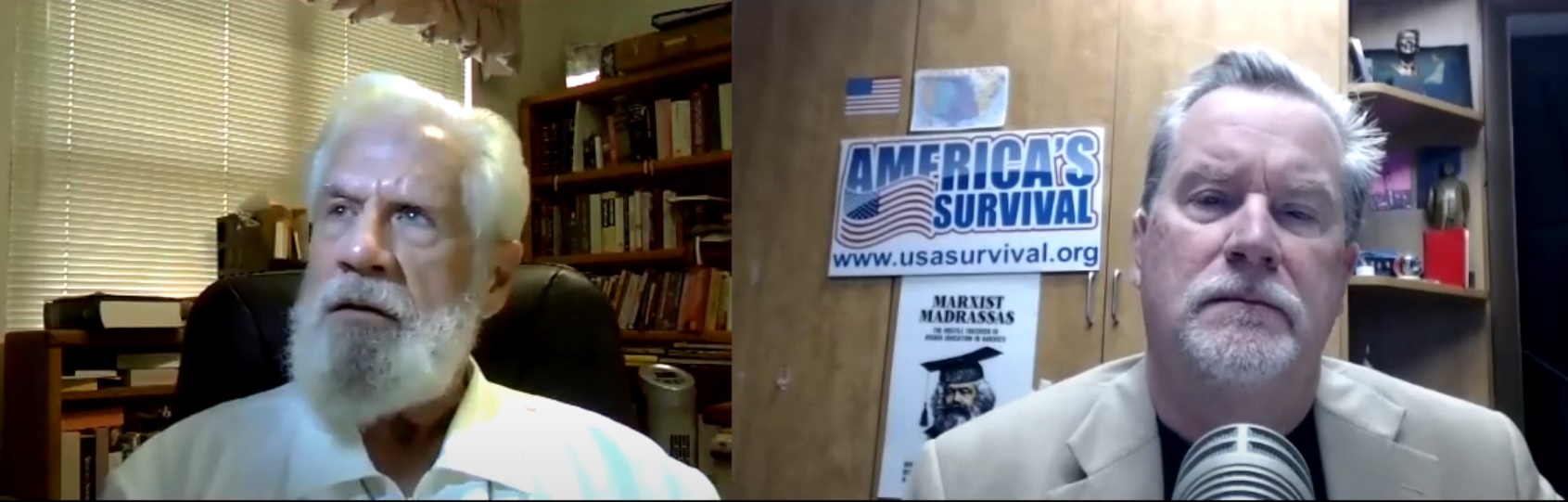
8/1/21 Vic and Cliff Discuss the China WebPage
"All the evils of the world are due to lukewarm Catholics." Pope Pius V
"All the strength of Satan's reign is due to the easygoing weakness of Catholics." Pope St. Pius X

Click the image above to publish your essay or article here,to
be included among those below.
Submitted Articles and
Reprinted Articles
(Note: copyrights on these articles wherever present will supersede the WebSite copyright at the bottom footer of every WebPage)
The Coup d'État and Forced Resignation of Benedict XVI. Benedict is still the True Pope, by Frank Albas
The Secularization and Demonization of Donald Trump, By David Byrne
Why do Catholics Pray With Patron Saints? Do Catholics Worship Saints?
Democrat Communists and Islamism. Democrat Communists also aligned with Islamists as their Hard Left Tool.
Still Time To Get It Right. “Once you understand the role of energy in everything, you can begin to appreciate why there's simply nothing more important to get right. Energy is at the root of everything. If you have sufficient energy, anything is possible. But without it, everything grinds to a halt.” Chris Martenson
Abolishing Political Parties: A Strategic Approach, by Daniel Taylor
Cardinal Sean O'Malley of Boston's Inappropriate and Dishonest Attack on President Trump's Immigration Policy. The Truth About Separation of Families at our Southern Border
Diuturnum: Leo XIII on the Origins of Civil Power. In Diuturnum Pope Leo XIII speaks of "Communism, Socialism, Nihilism, hideous deformities of the civil society of men". It's time to remember and reinvigorate his words.
The Ship is Off Course. Elena DiMaria, Saturday, January 20, 2018
American-Fences. A Poem by Rochelle Marie Harper.
Thanksgiving-Proclamation. Given by President George Washington in New York, October 3, 1789.
The Anti-Christians. By Nito Gnoci, Part 1 Of 4
The Anti-Christians. By Nito Gnoci, Part 2 of 4.
The Anti-Christians. By Nito Gnoci, Part 3 Of 4.
The Anti-Christians. By Nito Gnoci, Part 4 Of 4.
The Early Universe and the Human Embryo. On the Similarities of the Embryonic Human and the Embryonic Universe.
2nd Sunday of Lent, Transfigured of our Lord Cycle A Hope, inner soul room, transfiguration
A Pastor's Descant (Assumption Grotto News) Fr. Perrone: How our corporate prayers after Mass have been modified following the election.
An American Diocese upholds a Marriage against Abandonment. Which should be the norm. Abandonment of a Catholic Sacramental Marriage is assumed a priori to be a mortal sin.
Here comes the Synod Exhortation, and more EENS denial. Is this original simple mistake leading us into doctrinal and ecclesial revolution?
Agreeing with Mother Angelica, Rest In Peace, on no known exceptions to EENS. Are all VCII and Post-VCII "exceptions" to No Salvation Outside The Church just imaginary?
Was Archbishop Lefebvre Correct After All? Archbishop Lefebvre was correct in rejecting Vatican Council II, interpreted with irrationality. May God bless him for that.
Cardinal Kasper's False Arguments. Pope Benedict, Cardinal Kasper's false arguments for Synod Report: Vatican Council II agrees with the dogma extra ecclesiam nullas salus as it was interpreted by the 16th century missionaries.
Rahner's "Anonymous Christian" as main line Catholic theology. Coming back full circle?
The Heresy of Chrislam. Those claiming that the “Allah” of Islam’s Qu’ran and Yahweh or God of both the Old and New Testaments of the Bible are one and the same are missing one glaring point: GOD NEVER CONTRADICTS HIMSELF.
Faith, from the Easter series on the Three Theological Virtues. The virtue of Faith; One of the Seven Heavenly Virtues.
Hope, from the Easter series on the Three Theological Virtues. The virtue of Hope; One of the Seven Heavenly Virtues.
Love, from the Easter series on the Three Theological Virtues. The virtue of Love; One of the Seven Heavenly Virtues.
Prudence, from the Lenten series on the Four Cardinal Virtues. The virtue of Prudence; One of the Seven Heavenly Virtues.
Justice, from the Lenten series on the Four Cardinal Virtues. The virtue of Justice; One of the Seven Heavenly Virtues.
Temperance and Fortitude, from the Lenten series on the Four Cardinal Virtues. The virtues of Temperance and Fortitude; Two of the Seven Heavenly Virtues.
On the word Consubstantial, the Trinity and Infinity. On the Consubstantial (Single Substance) of God, and the mathematically impossible number of Infinity.
A Proposed Israeli National Doctrine that America should Learn From. Reprinted Article identifies common ideological enemies of Israel, the USA, and all Nations: Marxism, and New World Order concepts.
The challenge describes Capitalism as illusory and Marxism as solid. The mixture of religion just adds to the confusion of all good realists.
The Obama Ethos: Who is Barack Obama? What is his grounding, his ethos? The Obama Ethos explores Obama's grounds of being; his religious, moral and political guiding principles.
Obama the Moslem: Introducing Comrade Obama (peace be upon him.) Obama the Moslem: anti-Catholic; anti-Christian; anti-Jew; anti-American.
Freedom, yes – but from whom, and to do what? Is freedom from God enslavement to the world? Is freedom from the world enslavement to God? Which is better?
The Room: Born of that still inner voice. A story about a small church pastor who erects a small room to serve as a mediation room for his parishioners.
Are Catholics Saved, by having been Born Again? The theology of salvation: Catholic vs. Protestant.
Love thy neighbor as thyself: the Law in One Sentence. Can one simple sentence contain the whole of the moral Law of God?
The Catholic call is universal; it goes out to everyone. Although the Catholic call goes out to all, man’s free will means that all will not respond.
God’s Perfect Unconditional Love meets man’s Free Will. Perfect Unconditional Love can be rejected. Liberty and free choice may be a blessing or a curse.
Of Weeds and Wheat growing together, and the eventual separation. - Weeds and wheat in the field differs from in human kind, where either one can become the other.
Why Should I Believe in God? - an article by Eugene Rudder.
On Losing You - a poem by Rosemarie A. Stone.
Our Beautiful Love - a poem by Rosemarie A. Stone.
Catholic Communism: Similarities between Church Hierarchy and Pure Bureaucracy. Mises said that Communism equals Bureaucracy; the Church is a bureaucracy, therefore we have Catholic Communism. True?
The Source of Anxiety: Improper Priorities. Seek ye first the Kingdom of God and His righteousness.
“I, Pencil … ”; Capitalism in a Nutshell. Leonard E. Read
Endless Concessions to the Palestinians Pamela Levene
The Peace Treaty Sajid Ali Khan
Leftist Politics in Catholic Mass Mark Brumbaugh
The USCCB Flip-Flop Mark Brumbaugh
Open Letter to Daniel Cardinal DiNardo Mark Brumbaugh
The Lamb of God who takes away the sins of the world
The Gift Bearers Michael from Florida
Dear Vic And Others ... John Felland
The Church Is Rotten To The Core Michelle Lobdell
Hatred of Palin Janet Morana
Proper Catechesis Susan Greve
Who is Barack Obama? Pastor Robert Legg Greve
Limited War Doctrine Colonel Thomas Snodgrass
Rabbi Meir Kahane's Letter Rabbi Meir Kahane, OBM
Solzhenitsyn Speaks Aleksandr Solzhenitsyn addresses the AFL/CIO.
Jefferson Speaks (Declaration of Independence)
The American Constitution (American Founding Fathers)
American Democrat Party Platform Karl Marx and Frederick Engles
Marxist Fundamentals
Prof. Libor Brom
Re The Sin Of Scandal Phil Lange
Re Sydney Airport Security Ahmed
Marxist Infiltration into Catholic Thought Nancy Libert
New "race and racism" thread begun by Stephen from VT. On race and racism: the ever changing definition and generic usage of the word "racism."
The Bush War Doctrine Revisited: a fresh look at our horrible situation. A reproduction of the "Bush War Doctrine Revisited" article and discussion points by David Yerushalmi; there is much food for thought here.
Resignation of Benedict XVI and the Immediate Media Firestorm. The resignation of Pope Benedict XVI and Rev. Marcel Guarnizo's interview with the author that caused the international media frenzy.
The Jewish Shabbat. Description of Jewish Shabbat (Sabbath) from my Holy Land item supplier.
Kerry's Lies: The Old, Vietnam-Era Anti-War Chickens are Comming Home to Roost. POW Lawsuit Could Force Kerry To Come Clean - by George "Bud" Day, Chairman, Vietnam Veterans Legacy Foundation.
Just Laws for a Godly Nation. Many nations today still lack a core of just laws for a Godly nation.
What does the World Wildlife Fund have to do with World Youth Day? An unholy alliance between the Leftist WWF and the Vatican?
False Flag: Serious-minded fiction creating a better understanding of 9/11. Can serious-minded fiction play a role in creating a better understanding of critical contemporary social/political issues like 9/11?
Bringing the Liturgy Back to the Real Vatican II. Cardinal Burke Comments on Sacra Liturgia Conference
Layman letter to all bishops. Letter to Bishops from Mariann / Mary's Child
Fetal-Microchimerism gives new meaning to the bonding of Motherhood. How the unborn child blesses the mother and physically changes her, for the rest of her life.
Ars celebrandi et adorandi - Pastoral Letter from Bishop Thomas John Paprocki. With Ars celebrandi et adorandi, all Springfield IL Catholic Parishes move Jesus back to the center of life! YES!
To be, or not no be lukewarm; that is the question. Whether tis nobler to fight the good fight, or just smile and be nice ...
Technology: a Two Edged Sword. Technology can be used for good, or for evil.
More American Imperial Edicts Issuing Forth out of Obamunism. Archbishop Schnurr joins Rick Santorum in identifying American Imperial Edicts from this administration.
Benedict XVI's Motu Proprio Summorum Pontificum; Apostolic letter on 1962 Rite.
The Motu Proprio Summorum Pontificum confirms the 1962 Latin Rite as the 'Extraordinary' Roman Liturgical Rite.
The Pope's Letter to Bishops on Summorum Pontificum. Benedict XVI's Letter to Bishops on Summorum Pontificum issued the same day as the Motu Proprio.
The Explanatory Note on Motu Proprio Summorum Pontificum. An 'Explanatory Note on Motu Proprio Summorum Pontificum' issued by the Vatican.
A concerned Catholic spotlights Catholic funded Alinsky organizations. The Alinskyite Gamaliel Foundation underpins multiple Catholic funded Alinsky organizations.
From Shane Leslie Mattison, whose father was Elden Mattison Woolliams. Annecdotes from Shane Leslie Mattison.
Dr. Ben Carson, Champion of God, Family, Country and Decency in Government. Ben Carson can return America to being a Constitutional Republic once again.
A submission from someone who would be Pope. If all the last five or so Popes have been invalid Popes, then, where's the valid one? Why, Brother Michael, of course!
What is Evil? Man-made alternative realities
Absolute Nothingness and Non-Self: The Reigning Worldview of Global Power Elites and Western Ruling Classes
The Evil Eye Of Envy: Why Being ‘White’ Is Offensive To Some People. No Vice Worse Than Envy
Why Transgenderism Is Being Forced Upon America and Our Children. The Divine Androgyne
Trotsky's Permanent Revolution From Hell In America. The Soviet System in America
Acts 17:18-19-modern pagan and pantheist antithesis of the Word of God Ecclesiates 1:9 "What has been is what will be.."
Utopianism. Progressive Utopian Cultural Marxism Poisoning Minds, Churches, Schools, Politics
Evolutionary Theism Implies That Christ is Wrong About Creation. "For if you believed Moses, you would believe Me, for he wrote about Me. But if you do not believe his writings, how will you believe My words?" John 5:46-47
Isaiah 57 revisited: America's progressive pagan elites Staring into the Abyss
The Connection Between Baphomet and Why Researchers Are Creating Interspecies Embryos. 2 Corinthians 10:5
Modernist Christians in a Man-Centered Universe. Scientific Neutrality and Biblical Deconstruction
Cain, Marxism, Leftism and America's ruling class of 'superior' humans. The dragon they have in common
Demonic Darkness: America's Invisible Wave of Evil. Staring into the abyss
Chaos, Breakdown, Demoralization, Destruction: America's New Normal. How it came about and where we are going.
Satan’s New World Order Blueprint and Key Strategy. Christian Capitulation To the Serpent's Consensus Process
Iron Curtain Over American Minds Progressive Marxisms’ Ideological Utopia
Your soul: Cost of admission to the Progressive Pagan City of Man. New Egypt, Babylon, Sodom and Gomorrah
Is the World a Computer Simulation in the Minds of Robotic Overlords? Magic Science, Transhumanists, Gnostic Physicists.
Darwinism: Idol of mind symbolizing hatred of Triune Creator God. And Logical End of America
Global Oligarchy, Forces of Darkness, and the Spirit of Antichrist. Forces Darkness Within Church and State
Americas’ Spiritually Desolate, Parasitic, Ruling Class Nihilists. Satan and Powers and Principalities
The Peace Symbol: Occult Sign Meaning Death Against Christians.Hatred of Jesus Christ and Christianity
America's Modern Pagan Oligarchy, Aztec Gods, and Human Sacrifice. Isaiah 57 Revisited
The Divine Androgyne, Pandemonium, and the Battle for Our Souls. Satan's Rising New World Order
Why Proclaiming Jesus Christ the Word Became Flesh is Offensive. The Technocratic Utopian World Order
Gnostic Chiliastic Evolution: Satan's Alternative Plan of Salvation. The Great Reset
The Ascension To Power Of Misogyny. Hatred of Women
The Devil, the Big Bang, Evolution, Extraterrestrials and the Genesis Problem
Cultural Marxism. The Many Hidden Faces of Living Active Communism
Why Secular Liberals Actively Promote Evil. Mentally Retarded Liberals
The Fall of Mankind, the Religion of Evolution, and the Antichrist. "Pride goes before destruction and a haughty spirit before a fall." Proverbs 16:18
The Evil One and the Impenitent Who Receive His Mark. “And the LORD God formed man (and) breathed into his nostrils the breath of life; and man became a living soul.” Genesis 2:7
Darwinism: An Abomination Aborting and Rotting the Church. The falling away and apostasy from the one true and personal Holy Triune Creator God has not ended
Blessed is the Man Who Does Not Listen to Falling Stars. Who Follow After Damnable Heresies
Global and Ruling Class Criminal Elitists Their Ring of Power and Pact with the Spirit of Death and Hell
The Secret Life of Martin Luther King, Jr. A life almost totally at odds with his reputation as a minister of the Gospel.
Abortion and Communism. If you ever wondered where all the popular abortion-contraception-sexuality-perversion nuttiness came from, look to Marx's Communist Manifesto.
Could an American Surrender be in the offing with Biden at the wheel? Is this not the perfect time for Communism to strike, with Commies now governing America, China and Russia? What would Biden do?
The Soviet Union: Back From The Dead The Return of the Evil Empire
Can Ukraine Survive Putin and Biden? Can America? Can the Free World? Can Faith in God?
The Need for Secure Borders. Have we so easily forgotten what borders are for? Have we forgotten that evil exists in the world? Have we forgotten how to keep apart from this evil?
Tucker Carlson Carlson Gets His Comeuppance. Tucker's View: It is not moral for us to intervene in support of any nation's (Ukraine's) democratic self-determination and against Soviet military expansion.
Infernal Apocalyptic Atmosphere Over America Disintegration into nothing
Stand With Ukraine Against Russia and China By Cliff Kincaid
The True Christian Church Biblical Christianity and Roman Catholicism Contrasted
World War Quietly Conquering A Distracted and Blithely Unaware World. Could it actually be Satan's world war on despised humanity?
Systemic Nihilism: End of the Human Race Eternal Damnation of Human Souls
The Errors of Russia, the Dupes of Putin, and Another Holocaust Can The Increasingly Faithless Free World Be Saved From Russia?
Revelation 2:7" ...the closing of a steel door – a solemn, cataclysmic slamming of a door."
Teachings of Demons The Aeon of Horus, Reign of God-Men, and End of the Christian God
The Triune God, Supernatural Heaven, Souls, Hell, and Demons Do They Exist?
Message to All Wearied Truthtellers: Let Isaiah Be Your Inspiration the Remnant
America's Transformation Into A Mystical Pantheist God-State What the Death of God Has Wrought
Gnosis The Main Expression of Modern Paganized Christianity
The Worldview of Evil Spirits Revolution, Evolution, Materialism, Nihilism, New World Order, and More
Judgment and Wrath The Biblical Explanation for Madness and Evil
Evil Spirits, Death of God, Satanic Inversion Pagan America’s Reality of Madness, Demonic Bondage, and Non-Self
What Kind of God Do You Believe In?
2 Cor. 10:5 Destroying 'Scientific' Arguments for False Gods
The Creation Model Versus Modern Pagan Models
2 Corinthians 10:5
The Serpent’s Gnostic Luciferian Elite Oligarchy and Global Powers Demonic Darkness Over the West and America
Our Age of Malicious Perversion How Truth, Meaning, and Reality Have Been Perverted
Moving Toward Gorbachev’s “World of Communism” It's called the Monster Plot
9/11 Truth This is the real 9/11 Truth: Our “intelligence” agencies are infiltrated.
Gnosis: The Main Expression of Paganized Christianity in the New Age Inner Knowing, Self-Salvation
Doctrines of Demons and the Modern Pagan and Pantheist Antithesis The West's Greatest Threat
Americas’ Spiritually Dead, Deep State and Ruling Class Nihilists Walking Dead Parasitic Idolaters
Pagan-Darwinian-Materialism Redoubt of Miserable Self-Deceived Non-Self Nihilists
Bury The Dead And Move On Fuggedaboutit!
China's Mass Murder Experiment Phase Two
A Top to Bottom Housecleaning of America When we clean our house, my wife has a slogan, “Top to bottom,” meaning you have to target the whole house. The same advice applies to nations.
THE WORLDVIEW OF EVIL SPIRITS - an article by Linda Kimball MAGICAL MYSTERY CHURCH
A Republican Church Committee? Do Pro-American Republicans Even Know Who Frank Church Really Was?
Death of the Christian God in Hearts of All Humans Why America and W. Europe are Committing Suicide
Who Is Intolerant Because Ashamed: Creationists or Evolutionary Theists?
The Biden Doctrine of Demoralization and Defeat By Cliff Kincaid
Luciferian Humanists: Citing the Genesis Account is Evil “Any country grounded in Judaeo-Christian values can’t be overthrown until those roots are cut
Eternal Paradise Or Hell? How And Why Both Choices Are Freely Made… "
The Five Stooges on Capitol Hill They Think We Need Even More Doped No-Hopers In The American Intelligence Community
Luke 21: 29-31: Some Signs Of America’s Abandonment
And Spiritual Bondage
Trump and His Communist Enemies The Demonized Joe McCarthy Turned Out To Be Accurate In Everything He Claimed: Fox News Is Wrong About Him And About Much More
Fox Is the Leading "Trans" Channel There are some rather peculiar goings-on at the Fox News Channel.
Supernatural Genesis 1-11 vs. Pagan Darwinism God and Liberty or Fallen Mankind and Tyranny
Satanism, Communism: What's The Difference? Look To The Roots Of Communism
Evil in the White House In This War, The Enemy Is In The Ranks, Standing Right Next To You
Psychopathy and the Western and American Tyranny of Evil Leftist Progressive Myths
The Next Phase of Obama’s “Permanent Revolution” By Cliff Kincaid
Climate Emergency To Produce a New World Order By Cliff Kincaid
Raising the New Tower-- Occult Evolution: Antediluvian, Babylonian and Modern Expressions
De-Nazification and De-Communization in Russia The The mutual non-aggression Hitler-Stalin Pact, which started World War II, has been carefully “forgotten”
God to Mankind: NOW Do You See the Stupidity, Depravity, and Evil in Your Hearts?
Making Russia Great Again By Cliff Cinkaid
Our Call to Battle: Rise of the Spirit of Antichrist Prayer Article: “And this is that spirit of antichrist, whereof ye have heard that it should come; and even now already is it in the world.” (1 John 4:3)
The Last Hour and the New World Order Prayer
On the "Days Of Rage" Planned For The 2024 Marxocrat Party Convention Some of you just couldn't believe that the formerly Democrat (Confederate) Party had already gone totally Communist before the 1968 Party Convention
The enemies of God, reality, truth, western civilization and our souls Linda Kimbal column
Revisiting Nihilism: The Will Turned Toward Evil and the Destruction of Western and American Civilization
Nihilism…All That Exists is Matter and Energy The Worldview that Caused the Collapse of Christendom and Protestant America
Obama’s New Nazi-Communist Alliance
Moscow Terror Attack is Another KGB Operation to Fool the West
Terrorist Attack in Baltimore By Cliff Kincaid
The presence and influence of powers, principalities, and demons in our age of apostasy into godlessness
If you can't find the page you're looking for, try the SITE-MAP

Never be lukewarm.
Life itself demands passion.
He who is indifferent to God has already forfeited his soul.
He who is indifferent to politics has already forfeited his liberty.
In America, religion is not mere window dressing and citizenship is not a spectator sport. Do not allow our common destiny as a whole people to just happen without your input.
Seek the Truth; find the Way; live the Life; please God, and live forever.
All Published Articles
By Publication Date
Please Help CatholicAmericanThinker stay on the Internet and grow

Enter ye in at the narrow gate: for wide is the gate, and
Broad is the way that leadeth to destruction, and many there are who go in
thereat. How narrow is the gate, and strait is the way that leadeth to life:
and few there are that find it! Beware of false prophets, who come to you in
the clothing of sheep, but inwardly they are ravening wolves.
Jesus
Christ; Matthew 7:13–15
Related WebPages
Arguments Pro and Con Pages
We love a good argument. Here are some of our favorites.
Argument: The Good, The Bad and The Pointless. On the Reasoned Argument. (In the absence of reason, there is no valid argument.)
The Arguments pro and con under girding the Catholic American Thinker. Foundational arguments pro and con under girding Western culture and the Judeo-Christian ethos.
Artificial Contraception: Tool of Materialism with which to destroy Monotheism.
Acceptance of Artificial Contraception marked the single most
destructive turning point in the history of Western Culture, marking the
end of moral norms, foretelling tolerance of anything at all.
Refuting the Origin Of Species pseudo-scientific theory of Charles Darwin.
If Darwin’s Origin Of Species is a true Scientific Theory then there
must be a preponderance of evidences supporting it. Show us any of it.
Refuting the Repressed Memory Syndrome scientistic theory of Freudianism.
If Freudianism’s Repressed Memory Syndrome is a true Scientific Theory
then there must be a preponderance of evidences supporting it. Show us
any of it.
Refuting Marxism and sub-theories of Socialism and Communism, as Scientism.
If Marxism represents any sort of true Scientific Theory then there must
be a preponderance of evidences supporting it. Show us any of it.
Refuting Separation of Church and State as a Constitutional Principle.
If Seperation of Church and State cannot be found in our Constitution,
what makes it a Constituional Principle? Nothing. It is NOT a
Constitutional Principle.
Argument opposing Sharia law as brutal, oppressive and murderous.
Opposing Sharia Law means opposing brutal domination, wife beating, child abuse and even bloody murder.
Our argument supporting the Rule of Subsidiarity, practicality and common sense.
The moral and organizational Rule of Subsidiarity is crucial to the rights of man and essential for freedom.
The Sexual Revolution: Sexual Freedom, or enslavement and degradation?
The Sexual Revolution was supposed to free us, rather than enslave us,
and uplift us, rather than degrade us. It was a lie from the beginning;
it degraded whole cultures and attacked human dignity.
Our argument against Earmarks: the infamous Line Items of Pork Barrel Politics.
Legislative Earmarks feed corruption through skimming, lobbyist
paybacks, hidden political agendas and more, by providing a huge
political Pork Barrel feeding frenzy.
You cannot legislate morality is the false claim of the immoral.
We MUST legislate morality, as long as the legislature is representative
of the people. Otherwise, what is legislated reflects the whim of the
dictator(s) of the moment.
The religion as a private matter argument that cannot stand the light of day.
Claiming one’s religion as a private matter is a neutral thing, unless
the one with the claim is in authority over us, as an official or a
“representative” politician.
Our arguments against un-Constitutional Gun Control laws, rules and regulations.
The British feared that, absent "gun control", the militias in the
colonies could become as "regulated" and fearsome as the British
"Regulars" themselves.
Renouncing the great Communist Lie in its older, current and newer forms.
The whole “Communist Dream” is a lie; the history of “Communist
Revolution” is a lie; virtually everything about Communism is just one
big elaborate flagrant categorical lie.
Our argument supporting the Fair Tax as a sensible and practical Tax Revolution.
Fair Tax presents the possibility of a real, popular, voter-supported,
tax payer supported, grass-roots supported Revolution in America, and a
radical change for the better.
Argument against Public Education, which is, in fact, Government Indoctrination.
Public Education equals State Indoctrination, pure and simple. Education
is beyond the scope of government and not what our government is
constituted to do.
Argument against National Health Care, which is, in fact, Socialized Medicine.
National Heath Care equals Socialized Medicine, pure and simple. Medical
Practice is beyond the scope of government and not what our government
is constituted to do.
Values Versus Ethos: If we are not a Christian people then what the hell are we?
Obama set up the values versus ethos argument. He declared that we are
not a Christian nation, but a nation of citizens with “values”. What are
these values and where did they come from?
Being pro choice or pro woman's right to choose equals being pro abortion.
Saying you are pro choice, or pro right to choose, is saying you are pro abortion. Period. Pro choice equals pro abortion.
Warning all bourgeoisie: Obama will destroy the middle class.
Take fair warning all bourgeoisie, i.e., members of our vast middle
class: the Marxists despise you and intend to conquer you once and for
all.
The English national language of the United States of America.
There is no good argument against an English national language for America. What other language should we all speak here?
We argue against income minimums and caps, and for a free and private market.
Income minimums and caps are Marxism’s “moral” bait to gain popular
support for Socialism on the path to typical Marxist absolute
dictatorship.
Our argument against unions and for a more open and free marketplace.
Arguing against unions and other free market interventions is seeking
greater excellence in market goods, services, employees and employers,
through free and open competition.
The Thinking Catholic responses to questions re perpetual virginity of Mary.
From the "brothers of the Lord" to "The Davinci Code" to the word
"until" in Matt. 1:24-25, the ancient Hebrew cultural notion of
Professed Perpetual Virginity is doomed to be repeatedly challenged.
The contentious issue of Infallibility of Papal and Church teaching.
On matters of faith and morals, and matters relating to Divine
Revelation, our central Catholic trust is in the Infallibility of the
Holy Ghost, Peter, and The Church, acting together.
Our argument against fads, fashions, popular trends and herd instinct.
If speaking against fads makes me square, un-cool or un-hip, then so be
it. All fads are, in microcosm, expressions of rebellion against
tradition.
What does normalized, mainstreamed, open homosexuality say about us as a people?
Our argument against open homosexuality is an argument for the
continuance of Western Civilization, and the Western Culture Ethos and
the normative family.
The Marxism of Obama: Marching America into another Socialist dictatorship.
Vic Biorseth describes the self-documented Marxism of Obama which is
still not widely recognized among the American citizenry. Obama “change”
is Socialism, pure and simple.
Catholic Marriage Annulment: Is it merely the Catholic version of Easy Divorce?
Ecclesial law regarding the Catholic marriage annulment process has not
changed, yet the numbers of annulments granted in America have rocketed.
Why?
Opposeing affirmative action / equal opportunity programs as racist. Affirmative action (racial preference) requires racial exclusion, which is, definitively, racism.
Against diversity for the sake of diversity. Why do Marxists always seek more?
Our argument against diversity for the sake of diversity, which weakens and ultimately replaces ideology and ethos.
Against political moderation: America was not founded by indecisive moral wimps.
Political Moderation provides neither leadership nor opposition, but
merely a moral drag that historically prolongs moral debates and ends up
hurting morality.
The Death Penalty: Is our justice system too corrupt to be trusted with it?
The death penalty is too strong a sentence when serious questions exist
re the truthfulness of police, prosecutors, defense attorneys and even
forensic scientists.
Constitutional America: The argument for a return to basic rule of law. The arguments for a return to the Constitutional America intended by the Fathers and expected by the People through their Representative Government.
The Population Problem: A Real Problem, or a typical Scientistic Myth?
If England has a higher population density than China, and Hong Kong's
is higher than Bangladesh, then maybe the real problems are not related
to any over - population problem.
Definition of Marxism: Total control of means of production, including workers.
The definition of Marxism describes the social, economic and
governmental philosophy of Karl Marx, co-author of the Communist
Manifesto.
Anti-American Politics, pure and simple, describe Democrat Party strategy.
Anti-American Politics are practiced by all Leftists. Marxism, at any
level, is antithetical to the very idea of America. To be Marxist is to
be an anti-American.
The Godless Left leads the young and naive to their utopian Hell.
For an honest comparison of the effects on youth, we need to look to the history of the Godless Left versus the Religious Right.
My anti anti-American arguments are attacks on falsehoods, in support of truth.
American Communists hide their true identity and disguise themselves as
anti anti-Communists. Using their playbook, I hereby identify myself as
an anti anti-American.
Deliverance From Evil goes to the heart of the hot political debate in America.
Americans increasingly pray and work for deliverance from evil, as they
slowly wake up to a threat that is not merely political in nature.
Background history of the recent Catholic reformation (revolution?) in liturgy.
Reform of the Liturgy began with good intentions toward minor changes,
yet almost permanently trashed Latin, and Chant, and, etc., etc., etc.
Our definition of pro American goes considerably deeper than the dictionary. Anyone, anywhere, may be a patriot. Definition of pro American: one who loves and adheres to the American Constitution.
Our definition of anti American goes considerably deeper than the dictionary.
Anyone, anywhere, may oppose nationalism or national pride. Definition
of anti American: one who ignores or opposes the American Constitution.
Islam is the enemy; the non-Islamic world just dosen't know it yet.
I keep saying that Islam is the enemy here, and you keep not wanting to hear it. But it's true.
A submission of the “The Church is rotten to the core” argument and its basis.
If indeed the church is rotten to the core then all is lost; unless, of course, the statement is untrue.
Our argument opposing Libertarianism as an amoral conservative vote-splitter.
Opposing Libertarianism may seem counter-intuitive until you realize that it’s just another form of moral relativism.
Why is this American Christian nation not called a Christian nation?
This American Christian nation is oddly referred to as something other than a Christian nation. Why?
Argument Against the Anti-American UN: Why do we support such an antagonist?
The staunchly anti-American UN has a major goal involving world governance, and America is in the way of that effort.
Either limit the scope of government or limit citizen liberty.
Scope of government has broadened so much that there is now little of the living of life that is not subject to regulation.
A fatal false premise is a deadly logical trap for the mal-educated person.
A Fatal false premise with broad general consensus will always trump reason, evidence and critical thinking.
Faith versus Atheism: Is atheism really just a silly superstition?
The Faith versus Atheism argument is at the root of every other important argument.
“Are you saved” might be the conversation starter with a devout Protestant.
First, are you saved; then, are you saved by having been “born again”
(but not by Baptism) are the two popular questions of Protestantism.
Is the Bible the sole authority for teaching Christianity?
If Holy Scripture is the sole authority for Christian teaching, then, where does it say that in Holy Scripture?
Marxism Socialism Communism – what’s the difference between them all?
Marxism Socialism Communism are all mistakenly held to be different things, but they are one and the same.
Can we outlaw Marxism in the USA and still be a free thinking society?
I say we can and should outlaw any ideology that seeks the elimination of Constitutional America.
Can we outlaw Islam in the USA and still be a free thinking society?
I say we can and should outlaw any ideology that seeks the elimination of Constitutional America.
Is faith alone the sole requirement of salvation?
Luther’s dictum says that man is justified by faith alone. Is it true?
Argument for Repeal of the Federal Reserve Act of 1913.
The Federal Reserve Act did not prevent the Great Depression, so why does it still exist?
Argument to Repeal Amendment XVI, the Income Tax Amendment.
Repeal Amendment XVI and the very idea of progressively taxing income.
Argument to Repeal Amendment XVII and the Politicizing of the Senate.
We need to repeal Amendment XVII and restore our Senate to its original status.
Toward a return to argumentation; the lost art of reasoned verbal combat. A return to argumentation requires a return to critical thinking. Is it too late for Western man?
Secularism is clearly "the enemy" in the culture war; so, what, exactly, is it? Secularism is an aggressive and very pro-active form of atheism, in that it not only disbelieves, but it actively attacks belief itself, on all fronts.
Nito Gnoci


Linda Kimball
The presence and influence of powers, principalities, and demons in our age of apostasy into godlessness
Nihilism…All That Exists is Matter and Energy The Worldview that Caused the Collapse of Christendom and Protestant America
Revisiting Nihilism: The Will Turned Toward Evil and the Destruction of Western and American Civilization
The enemies of God, reality, truth, western civilization and our souls Linda Kimbal column
The Last Hour and the New World Order Prayer
Our Call to Battle: Rise of the Spirit of Antichrist Prayer Article: “And this is that spirit of antichrist, whereof ye have heard that it should come; and even now already is it in the world.” (1 John 4:3)
God to Mankind: NOW Do You See the Stupidity, Depravity, and Evil in Your Hearts?
Raising the New Tower-- Occult Evolution: Antediluvian, Babylonian and Modern Expressions
Psychopathy and the Western and American Tyranny of Evil Leftist Progressive Myths
Supernatural Genesis 1-11 vs. Pagan Darwinism God and Liberty or Fallen Mankind and Tyranny
Luke 21: 29-31: Some Signs Of America's Abandonment And Spiritual Bondage
Eternal Paradise Or Hell? How And Why Both Choices Are Freely Made
Luciferian Humanists: Citing the Genesis Account is Evil "Any country grounded in Judaeo-Christian values can't be overthrown until those roots are cut ... "
Who is intolerant because ashamed: Creationists or Evolutionary Theists?
Death of the Christian God in Hearts of All Humans Why America and W. Europe are Committing Suicide
THE WORLDVIEW OF EVIL SPIRITS - an article by Linda Kimball MAGICAL MYSTERY CHURCH
Pagan-Darwinian-Materialism Redoubt of Miserable Self-Deceived Non-Self Nihilists
Americas' Spiritually Dead, Deep State and Ruling Class Nihilists Walking Dead Parasitic Idolaters
Doctrines of Demons and the Modern Pagan and Pantheist Antithesis The West's Greatest Threat
Gnosis: The Main Expression of Paganized Christianity in the New Age Inner Knowing, Self-Salvation
Our Age of Malicious Perversion How Truth, Meaning, and Reality Have Been Perverted
The Serpent's Gnostic Luciferian Elite Oligarchy and Global Powers Demonic Darkness Over the West and America
The Creation Model Versus Modern Pagan Models
2 Corinthians 10:5
What Kind of God Do You Believe In?
2 Cor. 10:5 Destroying 'scientific' arguments for false Gods
Evil Spirits, Death of God, Satanic Inversion Pagan America's Reality of Madness, Demonic Bondage, and Non-Self
Judgment and Wrath The Biblical Explanation for Madness and Evil
The Worldview of Evil Spirits Revolution, Evolution, Materialism, Nihilism, New World Order, and More
Gnosis The Main Expression of Modern Paganized Christianity
America's Transformation Into A Mystical Pantheist God-State What the Death of God Has Wrought
Message to All Wearied Truthtellers: Let Isaiah Be Your Inspiration the Remnant
The Triune God, Supernatural Heaven, Souls, Hell, and Demons Do They Exist?
Teachings of Demons The Aeon of Horus, Reign of God-Men, and End of the Christian God
Revelation 2:7" ...the closing of a steel door – a solemn, cataclysmic slamming of a door."
Systemic Nihilism: End of the Human Race Eternal Damnation of Human Souls
Infernal Apocalyptic Atmosphere Over America Disintegration into nothing
Global and Ruling Class Criminal Elitists Their Ring of Power and Pact with the Spirit of Death and Hell
Blessed is the Man Who Does Not Listen to Falling Stars Who Follow After Damnable Heresies
Darwinism: An Abomination Aborting and Rotting the Church. The falling away and apostasy from the one true and personal Holy Triune Creator God has not ended
The Evil One and the Impenitent Who Receive His Mark“. And the LORD God formed man (and) breathed into his nostrils the breath of life; and man became a living soul.” Genesis 2:7
The Fall of Mankind, the Religion of Evolution, and the Antichrist. "Pride goes before destruction and a haughty spirit before a fall." Proverbs 16:18
Why Secular Liberals Actively Promote Evil. Mentally Retarded Liberals
Cultural Marxism. The Many Hidden Faces of Living Active Communism
The Devil, the Big Bang, Evolution, Extraterrestrials and the Genesis Problem
The Ascension To Power Of Misogyny. Hatred of Women
Gnostic Chiliastic Evolution: Satan's Alternative Plan of Salvation. The Great Reset
Why Proclaiming Jesus Christ the Word Became Flesh is Offensive. The Technocratic Utopian World Order
The Divine Androgyne, Pandemonium, and the Battle for Our Souls. Satan's Rising New World Order
America's Modern Pagan Oligarchy, Aztec Gods, and Human Sacrifice. Isaiah 57 Revisited
The Peace Symbol: Occult Sign Meaning Death Against Christians. Hatred of Jesus Christ and Christianity
Americas’ Spiritually Desolate, Parasitic, Ruling Class Nihilists. Satan and Powers and Principalities
Global Oligarchy, Forces of Darkness, and the Spirit of Antichrist. Forces Darkness Within Church and State
Darwinism: Idol of mind symbolizing hatred of Triune Creator God. And Logical End of America
Is the World a Computer Simulation in the Minds of Robotic Overlords? Magic Science, Transhumanists, Gnostic Physicists.
Your soul: Cost of admission to the Progressive Pagan City of Man. New Egypt, Babylon, Sodom and Gomorrah
Iron Curtain Over American Minds Progressive Marxisms’ Ideological Utopia
Satan’s New World Order Blueprint and Key Strategy. Christian Capitulation To the Serpent's Consensus Process
Chaos, Breakdown, Demoralization, Destruction: America's New Normal. How it came about and where we are going.
Demonic Darkness: America's Invisible Wave of Evil. Staring into the abyss
Cain, Marxism, Leftism and America's ruling class of 'superior' humans. The dragon they have in common
Modernist Christians in a Man-Centered Universe. Scientific Neutrality and Biblical Deconstruction
The Connection Between Baphomet and Why Researchers Are Creating Interspecies Embryos. 2 Corinthians 10:5
Isaiah 57 revisited: America's progressive pagan elites. Staring into the Abyss
Evolutionary Theism Implies That Christ is Wrong About Creation. "For if you believed Moses, you would believe Me, for he wrote about Me. But if you do not believe his writings, how will you believe My words?" John 5:46-47
Utopianism. Progressive Utopian Cultural Marxism Poisoning Minds, Churches, Schools, Politics
Acts 17:18-19-modern pagan and pantheist antithesis of the Word of God Ecclesiates 1:9 "What has been is what will be.."
Trotsky's Permanent Revolution From Hell In America. The Soviet System in America
Why Transgenderism Is Being Forced Upon America and Our Children. The Divine Androgyne
The Evil Eye Of Envy: Why Being ‘White’ Is Offensive To Some People. No Vice Worse Than Envy
Absolute Nothingness and Non-Self: The Reigning Worldview of Global Power Elites and Western Ruling Classes
What is Evil? Man-made alternative realities

Cliff Kincaid
Terrorist Attack in Baltimore By Cliff Kincaid
Moscow Terror Attack is Another KGB Operation to Fool the West
Obama’s New Nazi-Communist Alliance
On the "Days Of Rage" Planned For The 2024 Marxocrat Party Convention Some of you just couldn't believe that the formerly Democrat
(Confederate) Party had already gone totally Communist before the 1968
Party Convention
Making Russia Great Again By Cliff Cinkaid
De-Nazification and De-Communization in Russia The The mutual non-aggression Hitler-Stalin Pact, which started World War II, has been carefully “forgotten”
Climate Emergency To Produce a New World Order By Cliff Kincaid
The Next Phase of Obama’s “Permanent Revolution” By Cliff Kincaid
Evil in the White House In This War, The Enemy Is In The Ranks, Standing Right Next To You
Satanism, Communism: What's The Difference? Look To The Roots Of Communism
Fox Is the Leading "Trans" Channel There are some rather peculiar goings-on at the Fox News Channel.
Trump and His Communist Enemies The Demonized Joe McCarthy Turned Out To Be Accurate In Everything He Claimed: Fox News Is Wrong About Him And About Much More
The Five Stooges on Capitol Hill They Think We Need Even More Doped No-Hopers In The American Intelligence Community
The Biden Doctrine of Demoralization and Defeat By Cliff Kincaid
A Republican Church Committee? Do Pro-American Republicans Even Know Who Frank Church Really Was?
A Top to Bottom Housecleaning of America When we clean our house, my wife has a slogan, “Top to bottom,” meaning you have to target the whole house. The same advice applies to nations.
China's Mass Murder Experiment Phase Two
Bury The Dead And Move On Fuggedaboutit!
9/11 Truth This is the real 9/11 Truth: Our “intelligence” agencies are infiltrated.
Moving Toward Gorbachev’s “World of Communism” It's called the Monster Plot.
The Errors of Russia, the Dupes of Putin, and Another Holocaust Can The Increasingly Faithless Free World Be Saved From Russia?
World War Quietly Conquering A Distracted and Blithely Unaware World. Could it actually be Satan's world war on despised humanity?
Stand With Ukraine Against Russia and China By Cliff Kincaid
Tucker Carlson Carlson Gets His Comeuppance. Tucker's View: It is not moral for us to intervene in support of any nation's (Ukraine's) democratic self-determination and against Soviet military expansion.
The Need for Secure Borders. Have we so easily forgotten what borders are for? Have we forgotten that evil exists in the world? Have we forgotten how to keep apart from this evil?
Can Ukraine Survive Putin and Biden? Can America? Can the Free World? Can Faith in God?
The Soviet Union: Back From The Dead The Return of the Evil Empire
Could an American Surrender be in the offing with Biden at the wheel? Is this not the perfect time for Communism to strike, with Commies now governing America, China and Russia? What would Biden do?
Abortion and Communism. If you ever wondered where all the popular abortion-contraception-sexuality-perversion nuttiness came from, look to Marx's Communist Manifesto.
The Secret Life of Martin Luther King, Jr. A life almost totally at odds with his reputation as a minister of the Gospel.
"We belong to the Church militant; and She is militant because on earth the powers of darkness are ever restless to encompass Her destruction. Not only in the far-off centuries of the early Church, but down through the ages and in this our day, the enemies of God and Christian civilization make bold to attack the Creator's supreme dominion and sacrosanct human rights." --Pope Pius XII
"It is not lawful to take the things of others to give to the poor. It is a sin worthy of punishment, not an act deserving a reward, to give away what belongs to others." --St. Francis of Assisi

Truth is incontrovertible. Malice may attack it, ignorance may deride it, but in the end, there it is.—Winston Churchill
The smallest minority on earth is the individual. Those who deny individual rights cannot claim to be defenders of minorities.—Ayn Rand
Atheist Genesis:
In the beginning there was nothing, and nothing happened to nothing.And then nothing accidentally exploded and created everything.
And then some bits of everything accidentally encountered other bits of everything and formed some new kinds of everything.
And then some bits of everything accidentally arranged themselves into self-replicating bits of everything.
And then some self-replicating bits of everything accidentally arranged themselves into dinosaurs.
See?
(See The Darwinism Pages)
If you can't find the page you're looking for, try the
SITE MAP.