Formerly the Thinking Catholic Strategic Center
Confirming Culture=Religion+Politics
 |
 |
Darwinism, Evolution, and the Devolution of the Scientific Method
Vic Biorseth, http://www.CatholicAmericanThinker.com
Prompt any member of the SLIMC1 with a challenge to Darwinism and the predictable response will be SNRTACBT7 that evolution is not true. Prompt any Fellow among TTRSTF4 with a similar challenge, and the predictable response will be STNSEACPB8 that the scientific theory of evolution is in any way in question.
Darwin’s unproven hypothesis, today, rules science, in America, and everywhere. Here is a brief definition of Darwinism showing a short, simple explanation of Darwin's hypothesis, and the observations upon which he based them. I think you will agree that the observations themselves were, to say the least, shaky.
And, the observations are as far as it ever went; there is nothing else other than the observations supporting this so called "scientific theory," which in true scientific terms cannot be considered anything other than a hypothesis. Yet these observations, alone, form the foundation of Darwinism.
The question at hand, and what Darwinism and it's various sub-theories claim to answer, revolves around the dual question, what is life, and where did all the diversity of life come from.
Before Darwin, Linnaeus developed the field of taxonomy classifying life forms. He broke them into "families" based on physical similarities, and arranged them into a hierarchy, consisting of domain, kingdom, phylum, class, order, family, genus, species and organism. Linnaeus unhesitatingly put human beings among the primates. But Darwin went considerably farther, indicating actual hereditary relationship, and that humans and other primates "evolved" from a common ancestor, one day to be found in the fossil record. Note that this was hypothesized by Darwin, not observed.
And it has yet to be observed, by anyone; but it has been overwhelmingly accepted by the so-called "scientific" community. This treatment seeks to find out why. I put forward no other theory; I have none to put forward. My only questions involve the scientific method and its application to these various hypotheses under-girding Darwinism.
Darwin's theory insists that, GESGOEAEOT2 , an entirely new species "evolved" into being through natural selection. A new species is defined as one that can continue reproducing itself but can no longer interbreed reproductively with the parent species from which it evolved. That's what makes it a new species. That's Darwinism.
Such an event has never been observed, by Darwin, or by anyone. Well, let me qualify that: maybe in one instance among plants, but never among animals.
Rare plant hybrids, such as orchids, coming into existence only with the careful design, plan and control of man, have been created which can breed with each other, but not with the parent plants, which, I think, makes them a new hybrid species. Two points: First, none of these came about by natural selection, but by design of man; and second, the new hybrids have less genetic material than before, not more, making further "evolution" less possible. (It gets increasingly difficult to breed new varieties from hybrids, the more hybrid they become, until it is impossible to breed any new species from a hybrid at all.)
New hybrid plant species developed by man are exceptionally delicate greenhouse plants, in need of constant care and attention. Their blossoms may indeed be very beautiful, but, leave them alone for any length of time at all and - poof - instant extinction of the new species.
So what we're describing here is devolution, not evolution. Fruit flies are great to experiment with, because such wild variation is possible, and the life span is short. But even if you get a new variation, say, with day-glow orange eyes and chartreuse legs, and (suppose) it can reproduce but not interbreed any more with the parent fruit flies, it will have lost genetic material, not gained any. It will be increasingly difficult to get further variation out of it. You can't, for instance, breed a fruit fly the size of a humming bird, because that would be far beyond the genetic limits within the genetic code of fruit flies. There is a genetic limit within every species that sooner or later must be reckoned with; but that's not what Darwinism says. Darwinism indicates that infinite variation should not only be possible, but absolutely must actually exist. That's Darwinism.
Yet the fossil record and current observation shows that natural selection, which obviously occurs strictly within species, is quite conservative. Possible future variations are reduced, not increased. Natural selection within species always tends toward conserving the characteristics of the original species; any new species that comes out of this situation will have devolved, not evolved; they will have less genetic material to work with for variation among future generations, not more.
Darwinism predicts GESGOEAEOT2 , minute changes, always for the better, always from the more simple to the more complex. But the incredibly rich fossil record quite predominantly shows stasis, or the absence of change in species over millions of years, even in all of those cases involving particularly long lived species, even over hundreds of millions of years.
(Before we go much further, let me state here that whenever I'm talking about any time frame over, say, 70,000 years, I'm taking the word of TTRSTF4 who state and record the time period; what they base it on, I don't know, but I do know that radiocarbon dating is quite limited to measuring dates less than 70,000 years old. So, like everyone else, I'm kind of shooting in the dark here; when they tell me how many millions of years ago was the Cambrian Explosion, I have to take them at their word. Anything that old is long past its own half-life and is radiologically dead.)
Darwinism tells us that fortuitous mutation, for the better (which we will address a little later,) is supposed to be, GESGOEAEOT2 the mechanism in which new species are supposed to be brought about by the grand statistical plan of the Blind Watchmaker. Yet if we look at mutations that occur roughly once or slightly more per hundred thousand chances, we see that in almost all cases they cause some dysfunction or disability, retrogression as opposed to progression, devolution instead of evolution. Nature appears to be conservative.
This is born out by observation of nuclear incidents, including Hiroshima and Nagasaki aftermaths, and decades of laboratory experiments; no new species has ever been produced by mutation; mutant examples always contain the same or less of the genetic material from the parents, never more. And purposely cross-bred mutants are similar, but sterile.
The mule is a good example. The product of a horse and an ass, one of which has 72 Chromosomes and the other 74, the resultant mule winds up with an odd number, 73, which makes it quite impossible for it to reproduce itself. Like the mule, the leopon, another cross-bred animal made not by any Blind Watchmaker but by the careful, specific plan of man, a cross between a lion and a leopard, cannot reproduce itself. Even at that, we must remember that both parent animals were still felines, just as the horse and the ass were both equines, and that even this limited, infertile progress would not have ever been made if one of them had been a canine, or if they had not been brought together by the plan of a superior being.
There is a definite limitation on procreative ability that exists within and between species. When we try to unite an ovum of species A with a sperm of species B, even when A and B are closely similar species, we find that it is quite impossible for the sperm to penetrate the ovum. Even when the sperm is surgically implanted into the ovum, it simply dies, and cell division (pregnancy) does not occur. The parent male and female animals must have the same chromosomes and the same blood, and that occurs only within the same species. I don't care what any show biz or TV scientist tells you, chimps and men are not of the same species and they cannot be interbred.
Generation after generation of candidates for master or doctorate degrees have eagerly gone out into the field in search of paleontology’s Holy Grail, which is, a missing link; any missing link; any transitory species at all. Some go to old digs, some to relatively new ones, some to entirely new areas; all find fossils. Tons and tons of them. A very few gain celebrity by finding some new as yet undocumented species, or a much better example of a rare variety than has yet been found. But none find any examples at all of any of the many millions upon millions of transitory species that Darwinism says, indeed insists, must exist. Transitory species, according to Darwin, are supposed to vastly outnumber "successful" species, but we've yet to see even one of them.
And so generation after generation of paleontology student field trippers goes home in abject failure, often after years of hard work. They all find exactly and precisely the same thing: stasis, stasis, stasis; the species do not change. Same old fossil after same old fossil after same old fossil; piles and piles of them. Many of these students don't even publish their results because they see their results as a failure; they were supposed to find the predicted transitory species. Universally (at least publicly) they fail to see their work as any disproof of Darwinism. They were given a conclusion and instructed to go out and provide evidence for it, and so, they failed. The conclusion came first, not last; whatever objectivity they had on entry to the university was systematically trained out of them, by their professors, to make them into more of Darwinism's dogmatists.
Today's scientists are not objective enough or smart enough or brave enough to pronounce their overwhelming findings, so carefully and meticulously gathered, to be evidence against Darwinism's doctrines of evolutionary gradualism. Gathering evidence first, objectively examining it, and then forming a theory based upon it has become a thing of the past. Modern science does not, in its majority, consider lack of evidence to be evidence; they do not recognize the complete lack of evidence for their pet theory to constitute real evidence against it.
Darwin said that "natural selection is daily and hourly scrutinizing, throughout the world, every variation, even the slightest; rejecting that which is bad, preserving and adding up that which is good; silently and insensibly working, whenever and wherever opportunity offers, at the improvement of each organic being in relation to its organic and inorganic conditions of life." This is Darwinism's foundational dogma, called pan-selectionism. It absolutely requires a greater number of transitory species than successful species, and no transitory species, for anything, have ever been found. It describes a mechanism that cannot be demonstrated, even under the most controlled conditions with tiny life forms with many new generations born in a very short span of time. That's the problem.
And, that was the problem from the very beginning; all of Darwin's contemporaries were completely familiar at that time with the abundant, even overwhelming evidence of stasis in the fossil record. Even Huxley, Darwin's Bulldog, had to reject the notion of gradualism. Nevertheless, Darwinism (and Materialism) were reinforced and defended by accusing detractors of being unduly influenced by their religious beliefs. Huxley's famous "what's your alternative theory?" carried the day against all "scientific" opposition, because being both a scientist and a theist was ever increasingly seen as being in conflict.
More recently Darwinism has divided into two camps; the original one still proclaiming the GESGOEAEOT2 development of new species, and the newer camp proclaiming the PEWAG3 theory, espousing sudden, mass mutations happening at your basic, fundamental, very special geological moments. See? The voices from these two camps are sometimes quite shrill, as they point the finger of heresy at each other, and even practice name calling. The Punctuated Equilibrium school (Punk Eek to students) refers to the older and more orthodox Darwinian Gradualist school as "Darwinian Fundamentalists." Sound familiar? It always comes to this whenever denominationalism gets rolling.
At issue here is the complete lack of evolutionary evidence and the scientific response to that obvious lack.
Even after a century and a half, there is no fossil evidence for evolution, and an evolutionary mechanism cannot be shown or demonstrated. Up to this point, most of Darwinism's disciples preferred to lower their voices, at least in public, and assume the position of Huxley, Darwin's Bulldog, which meant to continue advocating Darwinism while being cool to Darwin's explanation for the mechanism for it, and to cover up by periodically yelling "what's your alternative theory?" at any opposition that raised its head out of the ever increasingly materialistic, scientific foxhole.
Stephen J. Gould, recognized as the father of the PEWAG3 denomination's theory of evolution, proposed that transitory species never existed, because, as the record clearly shows, the species do not change for long periods of time, and then they "branch apart" in what he calls special "geological moments." What's the mechanism for change? WDN9 . At least Gould had the guts to put forward another wild assed theory, which is more than can be said for his contemporaries. So, now we have two wild assed theories, and still no mechanism, and still no fossil record.
Look at the period known as the Cambrian Explosion. Absolutely blank fossil record for millions of years, followed by sudden appearances of thousands of entirely new and absolutely unique species, followed by millions of years of typical fossil stasis (no change in the species,) followed by millions of years of blank fossil record.
There was nothing in the record for multiple mass mutations to mass mutate from.
We're talking about a period here in which whole new phyla and very large numbers of unique new species unrelated to anything before or after suddenly appear, live their millions of years unchanged, and disappear, in open defiance of both Darwinism theories, and yet the overall theory stands, on nothing other than consensus. I have to hand it to the all of TTRSTF4 - they really know how to stick to their story.
So, according to them, the two possibilities for evolutionary specie
development are the artifact theory and the fast-transition theory. The
artifact theory says that the required transitory species did exist,
but somehow went poof and were lost and not preserved in the
fossil record. All of them. The fast-transition theory (punk eek) says
that transitory species never existed at all, at least as transitory
species, because they - whole species - mutated so much and so suddenly, you see. And then all fossils of all members of the species transformed from went poof and disappeared from the entire fossil record. See? Neither
hypothesis is based upon real science. Both absolutely insist, in the
complete absence of any empirical evidence whatsoever, that Darwinism
(evolution) must be true. Because - well, because.
How do they explain the clear fossil record of the Cambrian Explosion? The fundamentalist GESGOEAEOT2 Darwinism school makes the screwy attempt to shoe-horn the new and unique Cambrian life forms into pre-existing phyla, despite radical dissimilarities, and despite the huge blank gap in the preceding record. "We just haven't found them yet." Right. This weak response, I thought, was the whole reason for the birth of the newer PEWAG3 Darwinism school. But, what does punk eek say about the preceding blank gap ahead of the Cambrian Explosion? "Well, uh, - ahem - the, ah, phyla and species from which the Cambrian Explosion fossils suddenly mass-evolved are really there, it's just that - well, we haven't found them yet." See?
Modernist science, that is to say, scientism, today, does not in its majority consider lack of evidence to be evidence; they do not recognize the complete lack of evidence for their pet theory to constitute evidence against it. Early Darwinism allowed and encouraged a description of a completely closed natural system in which there were only natural, material causes and effects, a system totally divorced from God or from anything super-natural. It offered, eventually, after enough time is past and enough knowledge gained, completely natural explanations for everything.
Darwinism and Darwinian evolution became the strongest argument for atheism. This became its real strength, as science moved more and more into pure materialism. The value of the foundation of atheism outweighs the value of the scientific method. Atheism, by which materialism is strengthened, is really what Darwinism is about.
Most of science jumped on it; at least the youngest and most impressionable scientists at the time; now the Darwinism viewpoint appears to have come to predominate in virtually all fields of science. Many biologists today will say that, if Darwinism is false, then nothing in biology makes sense. (Which brings to mind Luther's similar comment on the Eucharist: If the doctrine of the Eucharistic Presence is false, then, nothing in Christianity makes sense.) Regarding biology, that may be true. If it is true then that truth is not the fault of those who questioned Darwinism from the beginning, nor is it the fault of those who question it today; it is solely the fault of generations of TTRSTF4 who lack scientific objectivity and integrity, and who have been taught and who have taught others to blindly adopt an attractive theory which has no supporting empirical evidence at all.
Darwinism is accepted and pushed as dogma by modern science because the high priests and devotees simply cannot accept and will not allow any other alternative. They either are not smart enough or imaginative enough or honest enough, or perhaps brave enough, to entertain any other possibilities or combinations of possibilities. Where they once sought truth they now fear and suppress it. When any evidence against the theory is produced, they theory is modified to account for it; the constantly evolving theory can explain anything, survive anything. The complete lack of any pre or post transitory forms in an example period (Cambrian Explosion) that Darwin's theory said should have produced huge numbers of great variations of them are STILL explained away by the statement that they really exist, but they just haven't been found yet. Although punk eek cannot itself find pre-transitory species not only in the Cambrian Explosion era, but ever, does not shake the faith of the punk eek devotees in the least. Darwinism appears to produce more faithful devotees than Christianity does.
These "scientists" cannot be taken seriously. If they were real scientists it would be possible to get them to consider the possibility that Darwinism is false; but it is not. They will not consider such a thing, despite their complete inability to provide any empirical evidence whatsoever for Darwinism. But all they can do is bluster and point to their fellows and to the huge "general consensus" and "generally accepted opinions" and agreement of the "overwhelming majority" among all of TTRSTF4 . That's it. That's all there is.
That's all they have to show for all their research. This is, again, nothing but opinion and conjecture surrounded by consensus. There is nothing scientific about Darwinism, and Darwinists are not scientists. They wouldn't know an experiment if one came up and bit them on the butt. All they ever look at and point to involves micro-evolution, strictly within some species. Everything they have to say about macro-evolution, meaning between species, is nothing more than guesswork, and pure, unadulterated, established dogma out of Darwinism.
Scopes Monkey Trial & Formal Education
The controversy between creationism and evolution points out perhaps more clearly than any other single issue the deep bias and close-minded bigotry of modern American liberalism and academia in general, and Darwinism in particular. Liberals don’t even care to discuss it, believing that it’s been settled once and for all, and anyone who would question it today obviously didn’t go to the same schools that they went to.
The 1920s Scopes Monkey Trial settled it for them; over the decades it has changed from a court case to a legend, with movies and books describing the case, which the historical record shows was quite complex, as a very simple open and shut case. In point of fact the case for the “fact” of evolution was not settled, or even discussed much. The trial became a media circus due to the colorful attorneys William Jennings Bryan, for the prosecution, and Clarence Darrow, for the defense. Bryan was a self-described “non-literalist” Christian, meaning that he held that the six days of creation described in Genesis did not necessarily represent six modern days, or any other precise amount of time, clocks and calendars not as yet having been invented. Self-descriptions aside, he was a Fundamentalist with a quite literal interpretation of most Scripture. Bryan allowed himself to be maneuvered into taking the stand as an “expert” witness, and grilled, not on Darwinism, not on evolution, but on the Bible, and was humiliated in an absolutely devastating cross examination. The test case trial ended, however, in conviction and a $100 fine; evolution had lost. Bet you didn’t know that.
On appeal a higher court threw out the $100 fine, but still held the anti-evolution teaching law to be constitutional. But due to media coverage including popular presentation to the public by sarcastic journalist H. L. Mencken and then later by Broadway and Hollywood renditions, this trial was an absolute triumph for Darwinism.
Two points: 1) evolution was not discussed as the main point of the trial, religion was; and 2) Bryan was no theologian; he was a lawyer, and not an appropriate spokesman or expert witness to represent the Bible on the witness stand against the likes of Clarence Darrow.
Bryan may have been an able attorney and a capable politician, and in some respects, perhaps, brilliant; but when it came to Christian theology, apologetics and sound Bible scholarship, he was not exactly any great Jesuit scholar.
And he wasn’t half the lawyer Darrow was or he wouldn’t have allowed himself to be tricked into personally defending the Bible, from the stand, instead of prosecuting a misdemeanor, which is what he was supposed to be doing.
In point of fact, the case itself was a test case, with a volunteer teacher, who probably had never even taught evolution, to go on trial; nevertheless, the media created legend involves a bunch of loony tune religious fanatics invading a classroom to persecute a poor, decent, inoffensive science teacher, who is rescued by a the truly heroic efforts of a world renowned anti-superstition attorney.
Rent the Spencer Tracy movie Inherit The Wind some night for this viewpoint. But correct science is not determined in the American courts, or on any other stage.
Darwinism has another group at least as biased as the Darwinist scientists previously discussed: the people who publish the obviously pre-censored and fraudulent textbooks and teach the classes American children attend; indeed they are as far removed from the school environment as they are from science. You can pick up any textbook in any American public school and find progressive pictures depicting the “record” of evolution of various living creatures, including man, for which there is not and never was any fossil evidence. Some of them represent skulls, some of them represent artistic renderings of what the creatures looked like, but only some of those at the extreme ends of the progressions exist in the fossil record; none of the intermediate skulls or creatures in the pictures ever existed.
These “intermediates” between species are pure inventions of the textbook authors. It must be quite easy to draw a picture of an imaginary or theoretical skull; again and again we see that paper will stand still for anything.
But then when we turn to the actual scientists, as we've already seen, we are in for an even worse surprise. The fossil record of man looks a lot different to me today than it did when I was in school, but then I don’t read many textbooks these days, and so I don’t often encounter publisher’s pre-censorship and author’s fraud on such a grand scale. It seems that perfect examples of Cro-Magnons and Neanderthals are represented among us in the living human population today; and Piltdown man was, of course, a carefully orchestrated and carefully preserved, forty year long massive hoax, with a cast of thousands of willing participants.
Two years of biometric testing in England of the Australopithecines (found by Mary and Louis Leakey in Olduvai Gorge in Tanganyika (now Tanzania)) resulted in the pronouncement that the “evidence” that these creatures ever walked upright was flimsy at best, and that they more likely moved about in a manner similar to other sub-human primates. The Leakeys were dreaming. Which means that the current certain record of fossil evidence shows that all representative fossil examples for modern man and all of his pre transitory forms consists of the bones of modern man, and, well, modern man; and the length of time that he’s been here shrinks back from millions of years to possibly 200,000 years, and probably quite a bit less.
But Darwin’s second book was called The Decent of Man, not The Decent of Races or Breeds of Man. So it would appear that all of the textbooks and all of the museum exhibits and all of the informative signs at the zoo and all of the TV nature documentaries have been, at best, glossing over the evidence, and at worst, lying to the masses. Exactly as though they had another agenda, low moral standards, and the belief that the ends justify the means; and even if they didn’t, it is exactly as if they did. Darwinism is, predominantly, fraudulent.
The only reasonable looking fossil progression seems to involve horses, particularly their hooves; but even these fossils appear to represent only micro-evolution creating different kinds of horses. Again, where’s the speciation? Archaeopteryx, the crown jewel of the theory, was supposed to be the link between reptiles and birds, having mostly reptilian features, but also feathers. Now it seems that, not only are any pre and post transitory species for archaeopteryx still glaringly missing after all these years, but the fossil record even shows that birds existed before archaeopteryx did, which means, at least, that archaeopteryx is not the sole ancestor of all modern birds.
The theory specifically states the “fact” of constant gradual improving change over time; yet the open pinhole eye of the nautilus, with its retina that practically cried out for the dramatic improvement in sight that would be made by the addition of a simple lens, did not even evolve a rudimentary lens over the hundreds of millions of years during which it existed.
These “new” facts and questions are not widely known today; they are not discussed today; they are not taught today; they are not in any textbooks; they appear to be purposely excluded everywhere. Indeed, scientists and educators who are not atheists are discredited for their scientific work or teaching, not based upon what they produce or what they teach, but based solely upon the fact that they are not atheist, as all good scientists and teachers today are expected to be; it is the new scientific orthodoxy. Secularism is just as intolerant as Christianity is tolerant.
The most vocal spokesmen for Darwinism insist not only that no other theory of life processes be taught, but that students may not even be taught or told that there is any controversy at all among scientists regarding the acceptance and truth and “evidence” of Darwinism. Or the lack of it. Teachers and many scientists have been fired for teaching any alternative to Darwinism, or for publicly speaking about or publishing any counter-Darwinism evidence; real science goes on only underground, because it so shakes the atheist faith system.
New scientists have Darwinism drummed into their heads as dogma, to the point that they accept it in spite of what they see with their own eyes. For example, most biologists today will look at a chimpanzee and a man, see the quite obvious and gross differences, and yet tell you with a straight face that, “where it counts,” meaning genetically, the chimp and the man are 99% the same. If we take them literally at their word, then we should be conversing with, doing business with and inter-marrying with chimps, because, “where it counts” we are essentially the same. Genes, which we haven’t begun to fully understand yet, are supposed to rate higher in our estimation than do our eyes and our common sense. The genetic codes of the chimp and the man are, in some ways, closer than those of the chimp and any other primate, or creature of any kind; therefore, say the theorists, we are nearly kissing cousins with chimps. The much greater similarities between chimps and other apes as compared to that of chimps and human beings does not even cause them to consider any possible invalidity of current interpretations of their genetic “evidence.” They know what the genes say, and the genes don’t lie; the genes are where it counts. See?
Darwinism notes well that, in similar embryonic ages and stages, the embryos of fish, tortoises, rabbits, cows, salamanders and men are all quite similar; in fact, almost indistinguishable, to the naked eye, or to the untrained naked eye, or at least to mine, and that’s true enough. This is promoted as evidence that all of them descended, GESGOEAEOT2 , from a common set of ancestors, that they are all related, and that gradual Darwinism must be correct. An interesting observation and a fascinating theory, but, again, an easily testable one, which Darwinism and Darwinists have failed to test, and with good reason. We must work to remember what they have told us about the adult stages of animals, such as the gorilla and the man, who are so clearly different: where it counts, they are essentially the same. That is what we are told; that is what we are to believe. But if we go to where it counts, to the molecular level, or to the sub-molecular level, to the genes, and lower, into the chromosomes, and lower, into the DNA, and lower, to the mysterious code within DNA, we see that, no, where it really counts, they are not the same. None of them are.
From the sperm and egg to the embryo to the adult life form, the code did not change and is quite unique among all life forms. None of them that start out being cows and end up being men. Every single bit of unique information needed for a completely determinate and unique individual human or cow or whatever exists from the very beginning and remains for life. Other similarities, whether observed “where it counts” in genes or in similarities at any stage of life, “prove” nothing but that they are animals. Which is supposed to be some great “discovery” or something. But when we give it just a little thought, once again we find ourselves standing in the middle of So What Central wondering how we wound up back at this boring place again. The starting point winds up being the destination with Darwinism at the wheel.
Everyone recognizes that we are primates, that we are mammals, that we are vertebrates and so forth; all of this was widely recognized long before Darwin ever published his theory. But the DNA denies any distant parental relationships between species. Other similarities are irrelevant. I can’t tell the difference between, for instance, mustard and celery seeds, or a lot of other tiny seeds. Therefore I do not open all the seed packages that arrive at our house in the spring and dump the seeds into a common container from which to plant my garden. The code does not change; if I intend a certain part of my garden to grow celery, then I had better be certain that the seeds that I plant there are exclusively celery seeds. I can tell the mature plants apart, and, for me, that’s where it counts. It’s important for me to not mix up my seeds for the same reason that it’s important for others to not mix up their embryos; they are similar, but celery seeds do not grow into mustard bushes and salamanders do not grow into cows.
Lack of empirical evidence puts dogmatic Darwinism on the offensive because Darwinism cannot successfully, or at least intelligently, defend gradual evolutionary theory. But dogmatic Darwinism will only publicly attack the easy targets and the obvious weak points in the anti-Darwinism ranks. The creation “scientists,” the fundamentalists and scriptural literalists who ignore or renounce solid empirical evidence, which, solely within species, exists, surely enough. Darwinism's offensive line will look for the believer who merely stands on his Bible and refuses to consider any other viewpoint; but the Darwinists do not see or cannot accept or will not admit that they are doing precisely the same thing. Secularism is far more biased and intolerant of other views than Christian fundamentalism ever dreamed of being, and it attacks far more than it defends, because its position is, in reality, indefensible. Darwinism very carefully selects the creationist victim and then destroys his arguments, and, viola, another victory for Darwinism. Sometimes it is subtle, sometimes not; sometimes it is specific, sometimes general; but Darwinism is always on the attack.
One TV crockumentary type show recently appeared to be objectively examining the history related to the Bible, but in a few places they let their secular bias be known. After referencing much of the enormous mountain of historical and archaeological evidence supporting so much of the Bible, the host then launched into a refutation of the entire Bible because he, and we suppose others, found no evidence of Moses and the nation of Israel wandering in the desert for forty years. So, if this guy couldn’t find any thousands of years old footprints and maybe a worn-out sandal clearly visible somewhere in the vast shifting sands of the desert, then we all should scrap the Bible. Well, it made sense to him, apparently even in the face of all the solid evidence confirming all the rest of the historical facts of the Bible. This kind of thing can be expected from those who cannot provide evidence for their position; they must then attack alternative theories, or their bases, in order to make their own foundationless theories more plausible. That’s modern science, and modern sociology. (I openly admit that I’m doing the same thing here; what’s good sauce for the goose is good sauce for the gander. But there is a difference in that I stand fully prepared to defend Holy Scripture, historically or otherwise.)
The problem seems to be directly related to the natural formation of an hypothesis, and the scientific method used to prove or disprove it. The hypothesis in question, Darwinism, asks, and seeks to answer, excellent questions; what are all of those unique marsupials doing exclusively in Australia, and how could they come to be there if they didn’t all have common ancestry? Terrific questions that cry out for answers. Testable answers. But they remain without legitimate answers based upon any empirical evidence, even though we all know, because Darwinism tells us, that they evolved, GESGOEAEOT2 , from some as yet unfound common ancestors after Australia was somehow separated from Asia and cut of from other land life forms. But, exactly, how did we come to know it? The absence of an empirically testable alternative theory does not constitute proof of the original theory of Darwinism.
The evolutionists of Darwinism are precisely like creationists in that they cannot provide any empirical evidence of the means by which it theoretically occurs. Because modern scientists faithfully believe that the universe consists entirely of a closed system of material causes and effects, they also faithfully believe that science must eventually be able to provide naturalistic explanations for everything observed. Neither of these premises is empirically testable. Yet, if they did not faithfully believe both of them, they could not possibly have ever formed the hypothesis of common ancestors for all of life, and of life itself just going “poof” and appearing in the first place. So the hypothesis and both of its foundational beliefs are not empirically testable, and are based upon faith alone. Darwinism is a faith based belief system.
In the unshakable viewpoint of the vocal scientific majority, the naturalistic evolution is the only viable explanation for life, and the very existence of life “proves” that explanation. this is a tautology, or a way of saying the same thing twice. An objective empiricist requires conclusions to be supported by experiment and observation and will discard any doctrine, no matter how cherished, that does not fit the clear evidence. There are only two possible dogmas acceptable to evolutionists today, and they are GESGOEAEOT2 , Darwinian gradualism, and, PEWAG3 . Neither is backed by the fossil record. Both require the existence of transitional species, yet neither can show any empirical evidence at all of any transitional species. Obviously, evolutionists cannot be truthfully described as objective empiricists; if they could be so described, then it would be possible today to engage them in a discussion on whether naturalistic evolution is true. But that is not possible, because it is their unshakable belief that naturalistic evolution is true, and they will not entertain any other possibility. None of their dogma or conjecture belongs in any science laboratory or classroom.
The second law of thermodynamics, or the law of entropy, tells us that it is quite impossible to construct an engine to operate in a repeatable, continuous cycle which does nothing other than take energy from a source and perform an equivalent amount of work. Some energy is always lost. Another way to state the same law is that the natural direction of heat flow is from a high temperature reservoir to a lower temperature reservoir, regardless of the total heat content of either reservoir. Which is to say that heat dissipates. This is natural. What this means in the practical world is that things, left alone, break down; complex things become simple; in nature, it is never the other way around. All bodies of complex structure gradually deteriorate into simpler forms.
A car or a bicycle or a boat, left alone and untouched for a long enough period of time, will deteriorate and become inoperable. We too will eventually become dust, or, perhaps, fossils. Darwinism, of course, flies in the face of this rule as we see the theory espousing ever increasing complexity up the evolutionary chain, always from the more simple to the more complex, never the other way round.
First, one-celled animals, then many-celled (skipping, by the way, two-celled, and four-celled, or any other definite small number of cells and making the quantum leap from one celled to many celled creatures like us - there is no such thing as a two-celled or a three-celled or a four-celled animal;) first, nothing but a-sexual simple cell division, then sexuality, and so forth. (It is also interesting to try to contemplate exactly how extremely complex and inter-dependent systems such as male and female sex organs might have “evolved” out of a-sexual cell-division, exactly simultaneously and in perfect parallel synchronization with each other. What, exactly, was a male sex organ one second before it was fully functional, and, before it was fully functional, what caused it to be “selected”?)
If we consider the complex code contained in the DNA chain in a simple one-celled animal, we could be dealing with some rather incredible complexity; however, when we compare it to the code contained in a DNA chain from a human being, the mind boggles. Arranged in a sort of spiral-staircase design, sub-microscopic in size, each “stair” in the chain contains over 5,000,000,000 genetic codes, roughly equivalent to the number of letters contained in a thousand complete sets of encyclopedias. And there are lots of stairs. “Our” complete sub-microscopic DNA strand stretches out to something like 150 centimeters long, with smitherillions of those code-containing stairs. But it gets even more complex.
The human body contains approximately 60,000,000,000,000 cells of extremely varied special characteristics. Every day, about 1,2000,000,000,000 of them are reproduced automatically, and the old ones eliminated. Every 120 days or so our blood, muscles and the protein in all of our brain cells undergo a complete renewal; but we still manage to remember stuff, and keep functioning as before. This kind of increasing complexity, which is supposed to have begun with and gradually evolved from one cell, or one living molecule of some kind, flies in the face of entropy. This is “where it counts,” at the DNA level. This is what tells us that every single human being who was ever born, is now alive, and who ever will be born, has the same set of ancient parents who started the species. The same thing may be said of horses, and of alligators, and of dragonflies. The dogmatists of Darwinism will tell us that those species-starting parent-sets were among link-species, examples of whom have not been found yet; but they all will be.
Any minute now. Along with the long, long train of successful similar species that are absolutely required if we evolved into what we are now. And along with all of the many necessary “failure” links that weren’t so perfect as to survive and become species.
The writings of the best and the brightest in Darwinism are literally loaded with descriptions of the appearance of intricate design or planning involved in the biological structures they examine, from the simplest to the most complex; but these descriptions are always closely followed by refutation of the existence of any real plan. Sometimes their descriptions of the elaborate but “false” designs are quite eloquent; they use terms such as The Blind Watchmaker, for instance, to describe “natural” effects of evolution, which may, in their eyes, be seen to do a better job than any conscious planner could possibly do. Of course. By self-made definition, modern science may not consider any alternatives to Darwinism at all, which means that the modern scientific viewpoint and approach is, by definition, subjective rather than objective.
None of this is real science. We need to realize the nature of the people pushing this stuff. Darwinism is nothing more than a philosophy or belief system, and the Darwinists are merely expressing opinion, conjecture and consensus; nothing more and nothing less.
So what's a Catholic to do?
Darwinism is false; literal interpretation of Genesis seems unlikely in the extreme; so what are we to believe?
Don't worry about it. It's not nearly as important to Catholicism as it is to Darwinism. The worldly evidence shows that a literal interpretation of Genesis did not occur; so, whoopity-doo-dah. I think we all pretty much knew that to begin with.
Obviously, Genesis was written a whole bunch of centuries after the events it described. It took some time for the story to be passed on by rote memory to generations who had higher developed language, and, eventually, written language, so it could be written in the first place. So, although it was inspired by God, the exact, precise memory of it wasn't exactly on the tip of the tongue (or pen) of the inspired author. I think it's fairly safe to say that the book of Genesis was not written on the eighth day by Adam. And if it was written by an inspired author "as dictated" by God, as some fundamentalists believe, than the Lord dictated it in the words He chose for His own good reasons.
Catholics interpret the creation story in Genesis in a spiritual rather than literal sense. We can read it allegorically and gain a more profound understanding of the significance of the events. We can read it as a moral lesson, and we can read it in an anagogical sense, leading us toward our true ultimate destination.
Here's the important thing to take out of the Creation story in Genesis. God is the First Cause of all causes. God wanted man to love God. The only way that man could really, actually love God was to be free to decide to love God, since love is, at it's most elemental form, a free will decision. Without free will, love is meaningless. Through the use of his free will, given by God, man chose to do something to displease God - that is how evil came into the world and how man became "fallen" from the original "good" state at his creation. This is original sin. God respects our free will, since He gave it to us, and He does not interfere with it. We remain free to love Him, reject Him, or do whatever we please; that is the true nature of free will.
Darwinists and other atheists see the Genesis story as a ridiculous tale involving a couple of naked people conversing with a snake under a tree in a garden; literalist Christians take it extremely seriously as a precise record of a factual series of actual events.
The actual creation of stuff and the actual creation of living beings, the precise mechanics of how that happened, is of vitally more importance to Darwinists and other fundamentalists than it is to Catholics. I am more interested in the lessons it teaches and the beautiful wording and the Tradition it passes on than how He exactly did everything. I don't know about you, but I don't spend too much time trying to understand miracles. I don't spend a lot of time on the virgin birth, for example, or the Resurrection, or how in Baptism I am born again of water and spirit. I can submit and bow before mystery; Darwinists cannot.
Another difference is that I value truth very highly, and am called by my moral code, born of my Church, my culture and my nation, to seek it, profess it clearly, not distort it, not oppose it, and not conceal it. This other ethos, this ethos of Darwinism - it is foreign to us. Our most common ethos comes to us through centuries of Western Civilization, founded on Judeo-Christian tradition and morality, further tempered by American history. This opposing ethos that so fears and distorts the truth, where did it come from? Let me try to put a name to it: it is the ethos born of the traditions and morals of BMDFP10 and the SLIMC1 If you are a bit of a Catholic empiricist, or if you feel drawn to science, then rigorously apply the scientific method, do good critical thinking, remain objective, and do not be the least bit afraid of where your research will lead you. Pursue the truth with vigor. Truth will never hurt you.
Are there any real scientists left?
Real science refutes Darwinism.
Phillip E Johnson wrote a good book, effectively refuting Darwinism, titled "Darwin On Trial" published by Intervarsity Press. I cannot recommend it highly enough.
Importantly, Johnson proposes no alternative theory to Darwinism.
What he does, very systematically and scientifically, is criticize Darwinism from the viewpoint of the scientific method. His arguments are absolutely devastating to Darwinism, and show it to be, in reality, an unscientific philosophy or belief system based solely upon opinion, conjecture and widespread consensus.
Michael J. Behe wrote another book, effectively refuting Darwinism, which I highly recommend, called Darwin's Black Box.
Unlike Johnson, Behe does propose an alternative theory, involving a "Designer" of the seemingly impossibly complex systems in existence today.
He comes close to providing proof of his position. I say close, because the tool he uses for his proof is the statistical tool of probability, and there is before us the simple fact that statistics "prove" nothing.
However, statistics do tell us a great deal about probability, which is used as an effective tool in just about all sciences. Behe concentrates on something he calls irreducibly complex systems; these are defined as working systems, from which if one single part is removed, the system will no longer perform its function or purpose. Examples: an eye; a wing; a hand; a microscopic flagellum; a cell membrane; and so forth. His best illustrations involve the molecular and sub-molecular levels, where you would think things would get more simple; they do not; they get more complex.
The book is quite readable, the math is easy, the examples quite interesting and the logic compelling. Things that you would think would be the least interesting turn out to be the most interesting. The "system" for instance by which our blood is able to coagulate and form a scab, beginning the process of healing. This is an irreducibly complex system, which of necessity had to come into being in a certain sequence; no other sequence would do. Darwinism indicates it must come into being gradually by chance mutations of something, over a very large number of chance occurrences.
Behe uses this system to show how life on Earth itself, and not only life, but the Earth itself, and not only the Earth, but the whole of Creation, the entire universe, has not been in existence long enough for this one irreducibly complex system to have gradually "evolved," according to the mathematical rules of probability.
It is the seeming total consensus among scientists today that the universe is between 10 and 15 billion years old; that is when the "Big Bang" is supposed to have happened. Even noting the truly significant difference between 10 and 15 billion years, the scientific community is certain, CERTAIN, that that range of years is accurate for the beginning of everything.
Yet, by the known rules of probability, all of TV scientist Sagan's "billions and billions" would not be enough if they were converted to trillions and trillions, or even quadrillions and quadrillions, they would still be way off, by many orders of magnitude, for how long it should take for even the simplest systems required for life to have gradually evolved in accordance with the model of Darwinism.
These books prove that, Darwinism notwithstanding, real science isn't dead yet.
Is "Intelligent Design" a scientific theory? It is not. It is a philosophical theory, and/or a hypothesis, the same as Darwin's theory. Neither has any solid empirical evidence to back them up and make them "scientific."
Still, today, any public challenge to Darwinism, in almost any arena, will call down the predictable responses of STNSEACPB8 , or, SNRTACBT7 that the proven scientific theory of Evolution of Species could be in question. Go back again to the brief definition of Darwinism page, and look at the abiogenesis sub-theory regarding the beginning of life, and what it is based upon. Then, look back to Scripture's Genesis, and contemplate the differences.
Some things are simply not given to human understanding, and God, and His ways, are among them. God is beyond human comprehension. God didn't have to plan or design, any more than He had to do anything at all that seems logical to us. All He had to do was to will something, or to breath a Word, and it simply came to be.
Go back and read the beginning of Genesis, and the beginning of John.
Sarcastic Acronym Hover-Link Footnotes: For the convenience of those readers using devices that lack a mouse, these footnotes are provided for all webpages, in case any webpage contains any hover-links. (If you don't have a mouse, you can't "hover" it over a link without clicking just to see the simple acronym interpretation. Click any footnote link to see the acronym and a detailed explanation; "Hover" the mouse over it just to see the simple interpretation.)
SLIMC1 Secularist Liberal Intellectual Media ComplexGESGOEAEOT2 Gradually, Ever So Gradually, Over Eons And Eons Of Time
PEWAG3 Punctuated Equilibrium's Wild-Assed Guess
TTRSTF4 Them There Real Scientifical-Type Fellers
TTRSPTF5 Them There Real Smart Perfesser-Type Fellers
TTRSJTF6 Them There Real Smart Journalistical-Type Fellers
SNRTACBT7 Surely No Right Thinking Adult Could Believe Today
STNSEACPB8 Surely Today No Serious Educated Adult Could Possibly Believe
WDN9 We Don't Know
BMDFP10 Baboons, Mongrel Dogs, Filthy Pigs and ...
HBAACOTE11 Human Beings Are A Cancer On The Earth
ACLU12 Anti-Christian Litigation Union
FLORMPORIF13 Flagrant Liar, Or, Mindless Parrot, Or, Innocent Fool
MEJTML14 Marxist Ends-Justify-The-Means Liar
IEJTML15 Islamic Ends-Ends-Justify-The-Means Liar MPAV16 Marxist Principles And Values
WBESSWG17 Wise, Benign, Elite, Super-Scientific World Governance
TRMITM18 The Reason Man's In This Mess
IYI19 Intellectual Yet Idiotic
TTRSCBTF20 Them There Real Smart Catholic Bishop Type Fellers
IACMPVND21 Illegal-Alien-Criminal Marxocrat-Party-Voting Nation-Destroyers
PEJTML22 Palestinian Ends-Justify-The-Means Liar
PSYOP23 "Psychological Operation" Mind Trick
CDC24 Covid Developmentally Challenged
LGBTQ+25 Every Letter Represents A Serious Psychotic sexual Identity Disorder
[All Web Pages listed in Site Map by date-of-publication;
oldest at the top, newest at the bottom of the list.]
Culture=Religion+Politics; Who Are We? Vic Biorseth
The Brilliantly Conceived Organization of the USA; Vic Biorseth
Return to the BLOG page
Return to the HOME PAGE
Subscribe to our Free E-Zine News Letter
 Long Live Israel Long Live Israel |
 Long Live Ukraine Long Live Ukraine |
 Long Live Taiwan Long Live Taiwan |
 Long Live South Korea Long Live South Korea |
|
|
|
Respond to This Article Below The Last Comment
Comment
Respond to this WebPage immediately below the last comment.
Or,
Comments
Respond to this WebPage immediately below the last comment.
Or,Publish
your own whole new Article from right here.
Date: Thu Dec 24 03:53:08 2009
From: Yoteech
Email:
Location:
Comment:
Dan, Your article is interesting and you argue logically - however some of your assumptions and pieces of information are incorrect. I think that if you had better understanding of what science does and does not do in regard to using evidence to support or to refute hypotheses you would see that the evidence does support the theory of evolution. Scientists do not usually speak in terms of "proving" a hypothesis - although evidence can disprove a hypothesis. The biology courses we took years ago did not have the benefit of more modern discoveries that have contributed to our knowledge today. The Catholic Church does support the teaching of evolution in schools today. Evolution explains the changes and developments that we see over the long term in life. That doesn't mean that God did not create life on Earth. It just means that there are natural processes at work and God does not create each form of life by "zapping" them into existence. You came to be because your parents had sexual intercourse. So all these natural processes are part of the way God continues to act as the Creator. The two ideas are not contradictory if we have the correct understanding of each of the ideas. It is a matter of reconciling or integrating ideas that at first glance may seem contradictory. Increased knowledge is what opens the door to a higher level of understanding and integration of the ideas paradox in creation and evolution.
Date: Thu Dec 24 05:22:07 2009
From: Vic Biorseth
Comment:
Yoteech:
First of all, Merry Christmas.
Incidentally, my name is Vic, not Dan.
It is quite correct that “Scientists” do not usually speak of using evidence to support or to refute hypotheses. That was from the pre-scientism days of real science; today “Scientific Consensus” rules. That is why Von Hayek coined the term Scientism, to differentiate it from the real thing.
It doesn’t matter what the Church teaches regarding the religion of Darwinism, because the subject is outside of the Depositum Fidei, the Revelation handed on from Christ and His Apostles. Which means that it is opinion, not infallibly taught and not required to be followed.
Theological science and material science are complimentary, not contradictory. They were split apart from the original philosophy in the great heresy of Modernism, to which I do not subscribe. Material science insists upon material evidences, not revelation, not faith, and not mere consensus. The only evidence existing supports micro evolution within species. There is absolutely no evidence supporting macro evolution between species. It is, therefore, invalid, on purely scientific terms, to refer to it as a scientific theory. It is an unproven and unsubstantiated hypothesis, and nothing more.
In the argument refuting Origin of Species page I presented a refutation of Darwinism on strictly scientific terms, the exact same terms that Darwinism claims to be supported by. I offer no alternative; we’ll save that for another day, after the question of whether true science has ever been applied to Darwinism or not. I say it has not. Take a look and see what you think.
All this discussion has to do with is material science and the scientific method, and nothing else. Either the scientific method has been applied here, or it has not.
Regards,
Vic
Date: Thu Dec 24 10:10:11 13 2009
From: Brenda
Email:
Location:
Comment:
Vic,
Merry Christmas! And God bless you!
I have read almost everything on your site, and you have changed my mind on several diverse topics. Thank you for your courage, your clarity and your well thought out explanations. I especially enjoy all of your “Arguments Pro and Con” articles and the following arguments. You always hit the nail on the head.
I feel I have been better educated by your essays and your strong, objective arguments. There is no one else out there who is doing what you are doing. Your whole approach is unique. You make me actually think.
Please, keep it going!
Brenda
Date: Thu Dec 24 14:08:47 2009
From: Vic Biorseth
Comment:
Brenda:
Merry Christmas, and best wishes for a prosperous New Year.
Thank you; I think we have crossed swords before in some other pages. Thank you for letting me know that this is not all just so much wasted babbling. It is gratifying to know that it does some good here and there.
I had to work half-a-day today, and as soon as Marcie is done with whatever is left to be done for the cats, we’re off to Michigan to visit family for Christmas.
God bless, and thanks again,
Vic
Date: Sun Dec 27 02:41:42 2009
From: Yoteech
Email:
Location:
Comment:
Safe trip to Michigan, Vic. My apologies for calling you by the wrong name. Dan sent me the email with your article in it.
I do not agree that there is such a thing as a deposit of faith revealed in the past and incapable of any deeper understanding or change in perspective.
I think that people who need that closed view of the world are entitled to have it but it does not reflect open mindedness or deeper levels of understanding. To me it reflects the mind of one who has failed to grow and who clings to the past as if allowing any new idea or change of mind somehow threatens their very existence. I doubt that we have any area of agreement. We might just have to agree to disagree. I don't see a clear understanding of real science or of well thought out theology/philosophy either.
When scientists reach consensus it is b/c many of them have reached similar conclusions when examining the evidence presented to them by other scientists or by nature. Of course, some of what Darwin said is out of date by 21st century standards. He didn't even have the benefit of Mendel's theories about inheritance to help him to understand the patterns of change that he observed. So much more has been learned since Darwin wrote "On the Origin of Species" that modern evolutionary theory has much more depth and many more supporting pieces of data than Darwin himself could have even imagined. That is life...it changes and progresses. Our job as intelligent human beings is to keep learning and growing ourselves.
Date: Sun Dec 27 05:17:20 2009
From: Vic Biorseth
Comment:
Yoteech:
The Gospel message, or “Good News” stands on it’s own, and men are given free will and thus the ability to accept it or reject it. As an objective truth, it does not change. Again, what the Church or any churchmen might teach regarding Darwinism (or chemistry, or mathematics, or physics, or any subjects outside of theological science) doesn’t matter any more than what any other similarly qualified teachers may teach. Their teaching has no more and no less weight. Subjects outside of the Depositum Fidei are not subject to infallibiltiy and not able to be elevated to Church doctrine or dogma. Catholics are free to study and probe them to their heart’s content. It is, rather, the unbeliever who has the more closed mind when studying anything at all, whether of the natural world or of any other. His thinking is limited to what he learned to be physical possibilities. That is his depositum fidei.
Once upon a time, in the earlier centuries of Western Civilization, when the Church invented and developed the University and brought higher education to the masses, all of education drove toward philosophy, the quest for truth. That was then, and this is now. Today, worldly men think themselves wiser than their ancestors, but they are wrong. They build a house of cards with their newer “knowledge” and they do not seek truth.
”Scientists” today reach consensus by consensus, and that’s about it. There is no application of critical thinking to be applied. There is and can be no skepticism.
Inheritance only occurs within species, Yoteech, never between them. Evidence for microevolution is not evidence for macroevolution. It cannot be shown to exist. Study the fossil and living evidence. What you will find is the same thing all scientists have found from the beginning: stasis, stasis, stasis; the species do not change. For untold millions of years, from trilobites to white sharks to squid to narwhales to giraffes, the species do not change. Nothing leads up to them. They appear, they live, and they go extinct, unchanged.
But there is such a thing as objective truth, as distinguished from subjective truth. Subjective truth comes from within us; what we feel, what we think, what we conjecture, what we are passionate about, what we may be able to prove or disprove. But objective truth stands outside of us, unchanged. It doesn’t matter what we think about it, how we think about it, or even if we think about it. It remains objective truth. It remains unchanged. Once you know that this impervious thing, this objective truth exists, you will begin to seek it. If you are open and honest in your quest for it, and persistent, eventually, you will find God.
Regards,
Vic
Date: Day Thu Dec 31 16:50:46 2009
From: yoteech
Email:
Location:
Comment:
Hi Vic,
I think you should take a course in biology now to update yourself. Find out what is meant by microevolution and macroevolution. I don't think that your definition of either of them is accurate.
In regard to "objective truth" vs "subjective truth" I have found during the many years of my own personal search for truth that those who claim to know "objective truth" are folks who simply are unaware of their own biases. So naturally if one cannot see his own bias then he thinks he is being objective. If - on the other hand - one can see his own bias then he has an opportunity to go beyond it to a deeper level of truth...Since God is Truth the deeper our search and level of understanding the better. Life moves on whether we move with it or not. You are welcome to stay in the church of the past if you wish. I am happy to follow the direction of Pope John XXIII and have the church examine itself. The movement among young homosexual priests to turn back the clock will only turn the church into a fossil. The living church will just move on because it is alive, not dead.
Date: Fri Jan 01 07:32:39 2010
From: Vic Biorseth
Comment:
Yoteech:
Happy New Year.
From Biology 101:
Microevolution: minor evolutionary change involving the accumulation of variations in populations below the species level.
These are the changes that result in breeds of dogs, cats, horses, etc., and in races of men. We all, in our wild diversity, remain human. Reproduction is only possible within species. All races of men can and do interbreed, and have done for thousands of years. Our species-unique human DNA proves that every single human being ever born of every race traces back to one and only one and the same unique set of originating parents of the whole human species.
Macroevolution: evolution that results in relatively large and complex changes as in species formation.
No speciation has ever been observed or found in the fossil record by anyone, including Darwin, in all of recorded human history. There is absolutely no irrefutable empirical evidence supporting speciation.
Go back to school, Yoteech.
You have confused objective reality with the notion of being objective. Let me try again, with another clue. Objective Truth itself exists, and it is completely independent of the mind of man. You can be as objective and/or as subjective about it as you choose; it is always unaffected by what we or anyone thinks about it. It always remains objective truth, immutable and unchangeable for all time.
Let’s not get off topic here. If you want to bash the Church, there are other pages for that; this one is talking about the religion of Darwinism. I’m still waiting for you or anyone to refute my main contention here with anything like a valid coherent argument.
See the Cafeteria Catholic pages, or those in the Catholic Issues section, or wherever else you might seek to attack the Church He founded. Try the The Church Is Rotten To The Core submission and following argument, with links, if you want my take on the direction John XXIII took. Or, submit a new argument via the Submit An Article page, as that one did. But here, in this Webpage, we will try to stick to the strictly faith-based belief system of Darwinism.
Let me know when you can present some empirical evidence substantiating it.
Regards,
Vic
Date: Tue Jun 08 08:19:37 2010
From: James Mears
Email: james_mears@yahoo.com
Location: Ulsan South Korea
Comment:
First, you present yourself as Catholic yet your views are inconsistent with the Catholic church which accepts the Theory of Evolution as truth and finds it is not inconsistent with the Catholic faith. Second, you have obviously stopped time beginning with Darwin's era and ignored the overwhelming confluent lines of evidence, which have come forward since Darwin. The evidence, so far, supports evolution is a fact and Darwin got most of it right. There is no such thing as a religion of Darwinism you nincompoop. Darwinism is a term made up by narrow minded people who cling to foolish and dangerous superstitious beliefs. Finally, stop diddling little boys you perverts.
Date: Tue Jun 08 09:03:07 2010
From: Vic Biorseth
Comment:
James:
Your submission was right on the edge; in fact it was over the edge and nearly got ignored, like so many from your side of the argument. However, on second thought, it was just so incredibly stupid that I decided it deserved publication for the laugh factor alone.
First, the Catholic Church does not accept the religion of Darwinism as “Truth.” You are dreaming. To say that Darwinism is “not inconsistent” with Church teaching is the same as saying that Darwinism is not inconsistent with the teaching of Wica, or atheism, or Freudianism, or Marxism, or Islam, or anything at all. “Not inconsistent” is completely neutral. I know it’s hard for you to understand, but cognition, reason and critical thinking need to be applied here, and all that may be beyond limited your abilities.
Second, there are no “confluent lines of evidence” that support the pure religion of Darwinism. You just made that up in your tiny little mind. There is no material or empirical evidence supporting the faith of Darwinism. You cannot produce any, and you cannot point us to any. It has never been produced, and it simply does not exist.
Finally, your “diddling little boys” remark clearly illustrates where your mind is and puts your whole knowledge-base into more proper perspective. The religious arguments of Darwinists sooner or later always come around to attacking belief in God, since belief in the Blind Watchmaker cannot be defended, either empirically or logically, with a straight face. Since you do not know how to attack God Himself, you attack His believers in the hope of demonizing the practitioners of the opposing religion. This is the promotion of and descent into hopeless bigotry, which stands juxtaposed to ordered reason.
But Truth has a way of remaining standing.
So, which denomination of Darwinist are you? Do you follow the older GESGOEAEOT2 Fundamentalist branch, or do you subscribe to the more modern PEWAG3 denomination? Just wondering …
Regards,
Vic – Your friendly, neighborhood nincompoop.
Date: Tue Jun 08 12:54:37 2010
From: Andrew
Email: lairson007@hotmail.com
Location:
Comment:
I have read Behe's book. He is a cousin of mine. He would disagree with almost all of what you have written on Darwinism. Please remove him from the page. You're misrepresenting him and his argument.
Date: Tue Jun 08 14:20:52 2010
From: Vic Biorseth
Comment:
Andrew:
You are just blithering here; you clearly don’t even know what you’re talking about. This is a venue for good, sound argument, not for boring opinionated blather.
Unless and until you submit some evidence for your position, whatever it is, or even the raw beginnings of some kind of coherent, comprehensive argument for it, do not expect your comments to be published here.
Regards,
Vic
Date: Tue Jun 08 15:34:07 2010
From: Andrew
Email: lairson007@hotmail.com
Location:
Comment:
Well, fossil records would be the obvious proof. Intermediate fossils of failed species do exist. Numerous examples have been found. Literally thousands. I must not know what you are meaning by intermediate species. I believe you have a misconception of the word. ALL species are transitional. It's common descent. Living transitional species include all organisms. Perhaps, humans are not transitional right now if you consider us to be the highest form of evolution.
Natural selection makes sense. The best fit species survive and reproduce. It's logical.
The similarities between anatomical structures and gene sequences.
In labs, scientist have evolved species that cannot interbreed with the first. They can do this quite easily actually. Which is technically macroevolution because it has evolved above species level. But they haven't turned a fish into a frog yet so perhaps that is what you mean. However, macroevolution has taken place over millions of years.
Your thermodynamics point is a complete fallacy. You are assuming the earth's energy is all that exists, when in fact outside sources of energy (the sun) explains how evolution has the energy to allow organisms to become more complex, rather than to deteriorate.
Now for your real scientists.
Phillip E. Johnson's book completely took all of his resources out of context. His book was dismissed by all of the scientific community. Saying he is right, and every other scientist is misled and/or misleading us is such a pretentious stand that I cannot even fathom your mindset.
I believe his book even lacked a biography.
I am related to Michael Behe and have read his books Darwin's Black Box and On the Edge of Evolution. You have misrepresented him. His arguments are that the systems are too complex for evolution to occur purely naturally, but you should mention that he believes in common descent, also. He believes humans derived from primates.
"Darwin also imagined the possibility that all life forms are descended from one original species from ancient times. This, in a nutshell, is a definition of Darwinism."
By your definition, I believe you have in fact used a Darwinist as one of your two scientists.
Date: Tue Jun 08 19:52:05 2010
From: Vic Biorseth
Comment:
Andrew:
That’s a little better, but you’re still on shaky ground.
Re your paragraph 1: What Darwin meant by intermediates and transitionals was those that showed a clear evolutionary path of species that fit between species, whether extinct or living; e.g., a giraffe with a short neck and legs, one with a longer neck and legs, and the final giraffe. The fossil record shows no such sequence. The giraffe simply goes poof and appears, and never changes. No species ever change, and there is no clear evolutionary trail to any species. Darwin postulated that the numbers of “fortuitous” mutations required for evolution to be true was very large, and that there most be more failure mutations than successful species. More freaks than normal births. This is not shown in the fossil record and it is not shown in normal living organisms.
Your paragraph two is all Darwinism stands on: it sounds good and make sense. So does spontaneous human combustion make sense, when it is explained by a really good proponent. That doesn’t make it science.
Re your paragraph 3:
The similarities between anatomical structures and gene sequences.What about them?
Paragraph 4: The only macro-evolutionary event ever produced by man involves rare orchids carefully bred in controlled greenhouse environments. It is not easily accomplished. As with all hybrids, and as with all mutations, the resultant orchid has less genetic material than the parent orchids, which means that there is less ability for future variation, not more, and the orchid is simpler, not more complex than the parent species. It is also super delicate. Without constant attention, care, temperature control, feeding and watering – you have extinction of this rare life form produced not by nature, but by the very careful design of a higher being followed by constant, unending care and attention.
No other macro evolutionary event has ever been witnessed by man.
Paragraph 5: The Third Law of Thermodynamics makes no such assumption about “the earth’s energy.” The law applies out in space as well as on earth. I’m talking about physics; what are you talking about? Things become more simple, not more complex, and that applies to the genetic limitations of living beings. Mutants and hybrids have less genetic material than their parents, never more. You can breed a Chihuahua out of a Wolf, but you cannot reverse the process and breed a Wolf out of a Chihuahua, because the Chihuahua has less genetic material and thus less breeding possibilities than the original Wolf. Even then, we are talking about micro-evolution because both are still canines. The laboratory-created orchids spoken of above could not be used to cross-breed with anything to ultimately produce the original parent species or anything like them, because too much genetic material has been lost in producing the rare hybrid orchid species. Sooner or later, you run out of genetic material to work with.
Re Phillip Johnson, being “dismissed” by all of TTRSTF4 from the recognized “scientific community” should be seen as a badge of honor. None of them have produced any evidence. All they have is idiotic, head-bobbing, scientificalophorous consensus, with congratulations and cigars all around. The seek consensus, accolades, mutual admiration and nothing more.
Re Michael J. Behe: Why should I mention what you claim he believes? If he didn’t write it himself, I see no reason to take your word for what someone else believes or doesn’t believe.
Re Darwinists: a Darwinist is a person who believes Darwin’s theory even in the absolute lack of scientific evidence supporting it, which necessarily means that he believes Darwin’g theory based on faith alone. You may call that whatever you want, but I call it a religion or a solely faith-based belief system.
After a serious objective inquiry by one real scientist, swimming against the tide, he postulated the following:
“As we reach the end of this book, we are left with no substantive defense against what feels to be a strange conclusion: that life was designed by an intelligent agent.” – Darwin’s Black Box; Michael J. Behe; pg 252.
Regards,
Vic
Date: Wed Jun 09 16:43:31 2010
From: Andrew
Email:
Location:
Comment:
You make false connections with Darwinism and the theory of evolution.
Darwin's writings had inaccurate predictions. No one disputes that. The premise of natural selection and evolution are why he's important. Now you speak of the intermediate species. There have been intermediate fossils found linking species' together. You're giraffe argument is something I'm not understanding. You are misinterpreting what the theory of evolution actually states. It reflects the self serving books I'm sure you read that misconstrue evolution's theory, so they can bash it. Of course, your argument will probably be that I have been indoctrinated with my own reading. Evolution is a slow change in an organism. Trait by trait. It has taken millions of years.
What kind of transitional fossil proof do you need? Many fossils have been found of failed species' that were intermediary.
What would an intermediate species between human and apes look like to you?
I cannot believe my best compliment from you came from paragraph 2. I made no good points whatsoever there.
What is most interesting with you is how you're arguments are completely fed on the first myth proposed by anti-evolutionists.
I'm talking about physics, as well.
Anti-evolutionists first claimed that the laws of thermodynamics directly conflicted with evolution. Which is what you're saying I believe. This is based on their own misinterpretation of the law. They assumed the earth was a closed system of energy, which it is not. Whenever scientists made the point that because of outside forces (like the sun) organisms on earth can become more complex, so it breaks no laws of thermodynamics. You took what you wanted from their point, which is the correct interpretation of the laws of thermodynamics. Which bring me to the modern day anti evolutionist like you. You now understand the law of thermodynamics and you have the old myth that it contradicts evolution. It doesn't. It's more than possible for organisms to become more complex with the energy of the sun. your argument is completely circular.
Phillip E Johnson wrote that book about 20 years ago. He had no bibliography. The scientific SOURCES that he borrowed from said he took their quotes outside of their meaning. Do you understand that? The basis for writing his book, his scientific sources, said it was a fabrication.
Ummm and Darwin's Black Box is Behe's oldest book. He's an admitted common descent believer. Heck I'll even email him and ask him that exact question if he believes in evolution. He is a proponent for intelligent design AND he believes in common descent. Now I see you like to accuse people of being black or white in their beliefs and exercising no critical thinking, but in your closed mind it appears that YOU don't see how it's possible to believe in both intelligent design and common descent. Behe understands that the evidence that we all came from one living organism is undeniable. He just also said it happened so fast that there was also a designer helping it occur.
Evolution happened and is happening. Our pope disagrees with you. EVERY prominent scientist disagrees with you. The educational system disagrees with you. And you are accusing them of arrogance? I guess maybe the pope, educational system, and every scientist is wrong. You're the only one, I guess, who can use critical thinking. Tell me who the pretentious one is?
Your argument may have been good in the 1960s though, so good work.
Date: Thu Jun 10 06:10:11 2010
From: Vic Biorseth
Comment:
Andrew:
Ho hum, heavy sigh and here we go again.
Consensus, consensus, consensus. Consensus rules science. Let’s take a vote on it: the ayes have it; we have our selves a scientific theory, gentlemen. Congratulations and drinks all around. You are lost in the giant consensus wave, Andrew.
You even think my comparing your argument to one in support of the hypothesis of spontaneous human combustion was some sort of compliment.
Beyond consensus, your only other supporting argument is the same old heap of tautologies that existed from the beginning. A tautology is a way of arguing in a circle with no evidence provided other than factors within the tautology itself. Example: Survival of the Fittest: Only the fittest survive to reproduce. That living being right there survived and is reproducing, therefore, that being is the fittest, proving the theory of Survival of the Fittest. And that’s all the proof we need. It’s the same with Natural Selection, and it’s even the same with the overall theory of evolution. A being exists, therefore, evolutionary theory is true.
Where’s the solid empirical evidence for Darwinism?
Where are all the billions or trillions or quadrillions of fossils of beings that didn’t make the grade, but that show the “slow change in an organism” that occur “trait by trait” until a new species such as the T-Rex suddenly pops into being and begins to hog the fossil record unchanged for millions of years? Where is the record of the T-Rex transitioning from anything at all? Where is the giant, humongous fossil record of anything transitioning from anything else?
Who are the undefined “they” who misinterpreted entropy, and who now have a correct understanding (or something)? It’s so easy to say they believed this or they were wrong about that, but if your argument is to be a good argument it needs a whole lot more specificity and detail. Otherwise, it’s just blowing smoke. Vague generalities do not cut the mustard here.
Show me the complex being that evolved from a simpler being.
Better yet, show me any incident of macro evolution at all.
Where’s the scientific evidence?
I am quite open to real scientific evidence on this supposedly purely scientific matter. Don’t waste my time with Darwinian dogma, silly consensus and group-think.
Regards,
Vic
Date: Fri Jun 11 06:15:35 2010
From: Vic Biorseth
Comment:
To All, regarding Andrew:
My last response threw poor Andrew into a frothy foaming flummox, and he went a little overboard in his response, which will not appear here. It was a little hissy-fit rant, devoid of evidences or coherent argument points; but then that is not too surprising, knowing how badly his poor little feelings were hurt.
He had quickly perused other pages on this site, and went into attack mode against me, rather than Darwinism or any other subject matter. He noted that I used the term “sodomite” somewhere, and so I, like the authors of holy Scripture, am a homophobe. He saw somewhere that I oppose “reparations”, and so, of course, I am a racist.
Bottom line, Andrew could produce no evidence for his argument, which was so weak to begin with as to be downright silly, and, like so many others, went into attack mode, not against the message, but against the messenger. If you don’t like the message, then damn the messenger as a hopelessly intolerant bigot, who goes against the popular argument. Not the correct argument, but the popular argument. Truth has nothing to do with it. Science has nothing to do with it. Oppose the current group-think only at your own peril.
I think psychologists call that sort of thing projection. Intolerant bigots project their own intolerance onto those who oppose their argument.
Oh well. Life goes on.
Regards,
Vic – your friendly neighborhood right-wing racist homophobic Chauvinistic bigot.
Date: Fri Feb 18 11:17:37 2011
From: Mahendra Singh
Email:
Location:
Comment:
Hi,
I suppose you have some valid arguments. In fact, I never had complete belief in the theory of evolution anyway. But the theory of evolution is what best explains the world as we know it. We take down the theory of evolution, what do we replace it with? Obviously, it should be a theory that can explain the world better, just as the "wave-particle" theory better explained Newtonian physics. That is where we have an issue. When the very valid question of a better theory than evolution is asked, we get the answer, "Well, according to the gospel and faith of Mr. Ding-Dong, blah blah blah blah ...". That, my friend, is faith, and faith has no place in observable empirical science. Science is based on hard cold facts, not on fanciful wishes.
Date: Fri Feb 18 20:57:01 2011
From: Vic Biorseth
Comment:
Mahendra:
Why should we replace it with anything? How did that get to be a requirement? That was Huxley’s famous response: “What’s your alternative?” I’m sorry, but that was not a valid argument then, and it is not a valid argument now.
All that Darwinism is based upon is faith, and faith alone. There is not one single hard cold fact supporting it. Where is the empiricism? Where is the speciation? Where is the evidence?
Regards,
Vic
Date: Sat Mar 05 22:46:40 2011
From: V V Sivaramakrishnan
Email:
Location:
Comment:
Hi Vic,
You are right in saying that the catholic church (as with most other churches) have not approved of Darwin's theory of evolution, but unlike you, the catholic church has not condemned it either, has it? I think till date the Catholic Church (and the pope) is keeping an open mind in this matter. There have been no encyclicals by either pope John Paul II or Benedict XVI on evolution. In fact Pope John Paul actually went ahead and said "New findings lead us toward the recognition of evolution as more than a hypothesis." Pope Benedict's views are not known. Why do you think they are much more open to the idea of evolution than you are? If evolution is simply a fad that is destroying catholic faith, I daresay the pope would be much more concerned and have more profound statements than you, my friend. It is true that the theory of evolution has not been proved completely yet, actually even the theory itself is evolving. Evolution now is understood to be far more complex than what Darwin envisioned. Where is the clinching proof? None. The observations that evolution MIGHT BE in fact correct? Many. The question is not settled one way or the other. Just because you do not like it does not make Darwin or thousands of scientists wrong. This is precisely why the Catholic Church and the popes are keeping their mouths shut. If they pronounce Darwinism as a heresy, and then in fact someone goes on to prove in future that it is in fact correct (which is quite likely), then the DAMAGE DONE TO THE CHURCH WOULD BE INCALCULABLE. They do not want to take that risk. That is why they straddle the fence without taking positions, wise thing too.
I do not share your contempt for scientific consensus. The best method of sorting the wheat from the chaff is for the evidence to be examined by the experts and your peers working in the field. Otherwise, we would have all kind of crackpot theories masquerading as science running amok. Have you heard of the "Baramin theory" propounded by the "creation scientists" against the evolution theory? Check it out. Tears of laughter were running down my face after I finished reading it. No wonder they are not taken seriously by mainstream academics. Science has an established methodology. Take the observations first and draw conclusions based on that, not the other way around. This is precisely the problem with "creation scientist". They have made a premise first. "Earth was created 4000 years ago and everything in it along with it". Now they start hunting for evidence that seems to support them, ignoring thousands of overwhelming proofs that they are wrong in their premise. That is like digging your head in the sand and saying the world has gone black. There have been experiments conducted by eminent scientists like Richard Lenski which MIGHT BE proof that evolution is in fact correct, or at least that many ideas of it is in fact correct. But of course the idea is open still. But casual dismissal of evolution might be contrary to the critical thinking that you seem to hold sacred.
Affectionately, V V S
Date: Sun Mar 06 06:31:24 2011
From: Vic Biorseth
Comment:
V V S:
Like the Catholic Church, I do not condemn the faith of Darwinism, per se; what I condemn the feigned relationship between science and Darwinism, and the “leading academics” and other silly twits who claim or pretend that the religion of Darwinism is somehow scientific. There is nothing scientific about it. It is either a religion or a silly superstition. The only thing that might give it the elevated status of a recognized religion is the near global acceptance of it by so many who have quite obviously not applied the scientific method to it. Darwinism as taught today in schools all over the world is a faith-based belief system, pure and simple.
I described how Darwinism not only ignored but violated the scientific method in the Refuting Darwinism page on this site. No speciation event has ever been so much as observed, let alone independently verified or subjected to peer review. Where is the evidence? Where is the independent testing? Where is the verification? Where is the peer-reviewed conclusion? Darwinism enjoys near universal consensus, but consensus on what, exactly? It enjoys consensus on the idea of it, and the idea alone, with nothing else to back it up. That is not science.
MIGHT BE does not apply here. MIGHT BE is not how you were taught about Darwinism in school. It is taught as fact; scientific fact. In millions or billions of human minds, it invalidly holds the elevated status of a scientific theory, thanks to all the leading academics you hold in such high regard. I submit that the damage done by these academics to the ability of their students to do good Critical Thinking is INCACULABLE.
I suggest you take a look at the Refuting Darwinism page mentioned above to see how Darwinists formed conclusions first and then wrapped their flawed observations and resultant theories around the pre-formed conclusions.
While I have always had an interest in and love for science, creation science doesn’t interest me; I feel no need to know everything about everything. I am able to bow before mystery, and my love of science is subordinate to my love of theology. (See The Modernist Heresy page for how material science and theological science were split apart from the breakup of philosophy.)
A word of warning from an old man to a younger one: your beloved academics and intellectual elites are leading the world into error. Such errors as Darwinism, Freudianism and Marxism are only at the core of it all. The completely bogus human population problem; the bogus relationship between HIV and AIDS; the bogus notion that we will run out of “non-renewable resources”; so many others I have railed against on this site all have one thing in common. They are, in part or in whole, co-opted and used by evil men with devious socio-political motives. These errors and falsehoods are used as mere tools, mere stepping-stones, which will be used to recruit “useful idiots” and to take charge of free men and free nations.
It is not only your critical thinking mind they are after. Get yourself free. Use the human mind you are blessed with, and use it properly.
Regards,
Vic
Date: Mon May 02 15:51:01:2011r
From: CathyAnn
Email: cathyann224@yahoo.com
Location: Raleigh, NC
Comment:
I just had an almost relationship destroying argument with my brother. We are both conservative, orthodox Roman Catholics and when I briefly mentioned the fallacy of evolution, the theory of randomness and chance specifically, he blew up and said I was influenced by Protestants and didn't know what I was talking about. Didn't I know that the Vatican now supports Dawinism?
I looked it up. It's true. Here's a link for starters: http://www.theregister.co.uk/2009/02/11/vatican_on_darwin/
After reading such books as "Tornado in a Junkyard: by James Perloff, "I Don't Have Enough Faith To Be an Atheist" by Norman Geisler, and watching the documentary by Ben Stein "No Intelligence Allowed," I was SHOCKED that the Church supports a theory I think has NO evidence to support it and still think is false.
How can this be? I am so upset I feel ill.
Date: Mon May 02 17:45:37:2011r
From: Vic Biorseth
Comment:
CathyAnn:
Not to worry. There are all sorts of “reporters” out there who report this exact same fraud; some of them aren’t even aware of what they are doing, and some of them know full well, and do it out of malice. You have to carefully parse the words they use. The Vatican has never endorsed Darwin’s theory on speciation or on the beginning point of life. The Church has recognized Darwin’s theories, and a whole lot of other theories, as being valid hypotheses worthy of consideration. Another way of saying the same thing is that Darwin’s theory is worthy of careful criticism. Does that sound like an endorsement?
But the Darwinists, and the jump-to-the-gunners, will re-word it to say that the Vatican has endorsed Darwin’s theory, which is something the Vatican has not done. Read the article at the link again more carefully and more critically. Then, see if you can find any official Church statement fully supporting Darwin’s theory as in any way proven. You won’t find it.
If you do find any particular Bishop or Cardinal, or group of them, who are actual Darwinists, remember that “The Church” means the full body of Bishops in communion with the Pope; if that is not the case, then “The Church” has made no such statement.
And “The Church” is extremely unlikely to make any such statement regarding anything that is not already in the Sacred Deposit of Faith anyway. When scientists who also happen to be clerics make statements strictly about material science, those statements are not theological statements, but temporal ones.
The simple fact remains that no one in all of history, including Darwin, has ever so much as observed any natural speciation event. Therefore, according to the rules of science, Darwinian speciation cannot possibly be elevated to the level of Scientific Theory.
Regards,
Vic
Date: Day Sun Apr 15 22:36:23 2012
From: Gene
Email: eezerod@gmail.com
Location: Ontario, Canada
Comment:
Comment:: What is most important in any discussion is the personal implications. If evolution is true then our lives are devoid of meaning. Why argue? Scientific fact, for anything to exist in the universe there must 5 Constants: TIME, FORCE, ACTION, SPACE and MATTER. Genesis.1 - In the beginning[Time] God[Force] created[Action] the heavens[Space] and the earth[Matter]. It is obvious that God THE SCIENTIST is the only meaningful option.
Note:
Monday, October 08, 2012
As part of the ongoing effort to upgrade this whole website, upgraded this webpage to the new BB 2.0 - SBI! 3.0 release and to make use of the new reusable code features.
An earlier phase of this major conversion corrupted or adversely affected some fonts, alignments, quotes and tables in the previously published webpages. Not to worry; this phase is converting them all, one by one.
Eventually, every webpage on this site will have the same look and feel as this one.
LOVE this new release!
Regards,
Vic
Date: Mon Apr 01 11:03:43 2013
From: James
Email: james_mears@yahoo.com
Location:
Comment:
Vic Biorseth, You are seriously deluded and out of touch. Pope John Paul clearly stated the position of the Catholic church on the Theory of Evolution on Oct 23, 1996. The fact that you are uinaware of this or ignore it is amusing.
Date: Mon Apr 01 19:17:32 2013
From: Vic Biorseth
Comment:
James:
I can't really be sure about whether I am deluded or out of touch, because I'm no good at self diagnosis; perhaps I should ask my wife or someone else. However, I do indeed know that your statement that I am unaware of John Paul the Great's statement on evolutionary theory is just a flagrant categorical lie. You just made that up out of thin air.
John Paul said that it was "more than a hypothesis" and that we should be considering not that theory alone, but all theories (plural) of evolution. I am fully aware of all that.
So what's your problem? Is is that you just don't like me?
Regards,
Vic
Date: Wed Mar 03 10:29:19 2013
From: MaryAnn
Email:
Location:
Comment:
Vic,
You have said in several places that no teaching of the church has ever changed, and that no pope ever taught any error. Now it seems that a pope said evolution is more than a hypothesis, and you have renounced it as not even a good hypothesis. So first, it looks to me like a teaching has changed, and second, it looks like you are at odds with one of your popes. Would you care to elaborate on these points?
MaryAnn
Date: Wed Mar 03 19:29:30 2013
From: Vic Biorseth
Comment:
MaryAnn:
Sure.
- The Church never changed any teaching or truth that came out of the original deposit of faith laid down by Jesus Christ and His Apostles. That means, teachings having to do with Church dogma, other doctrines and other Scriptural and Traditional truths having to do with Christian faith and morals.
- No Pope ever taught error on, or changed the teaching on, any dogma, doctrine or other truth laid down in the original deposit of faith.
- Darwin's theory of evolution was never in the original deposit of faith. It is an entirely new and modern invented article of faith for its adherents.
- I disagree with John Paul the Great on a matter of purely empirical natural science which is not a matter of faith and morals, and which is totally divorced from any infallible or official Church teaching, from any Pope or any Council. He felt it was more than a hypothesis; I hold that it was and is a very poor hypothesis, with nothing whatsoever to back it up other than massive consensus.
I may change my opinion on the matter if and when any actual, real empirical evidence is produced supporting it. All anyone claiming "proof" ever produces is the same old boring micro-evolutionary evidences: color variation in moths; woolier breeds of sheep; variation in finch beaks; breeds of dog; etc., etc., etc. The moths remain moths, the sheep remain sheep, the finches remain finches, the dogs remain dogs, etc., ad infinitum, and they call all this evidence of speciation.
Where's the speciation? Darwin's theory was called The Evolution Of Species. If no natural macro-evolutionary event, meaning, the evolution of any species out of any other species, has ever been so much as observed by anyone, including Darwin, in all of recorded history, then, how does this "theory" qualify as anything more than an absolutely unsubstantiated personal hypothesis?
I think John Paul the Great was issuing a challenge, to get people to look more closely at this, with an eye to classical empiricism and scientific proofs, to see where this might lead any true scientific thinkers. So far, no such natural science proofs have been forthcoming.
Just like Freudians, and just like Marxists, Darwinists sit around and think about it a lot, but they scientifically prove nothing whatsoever about their beloved supposedly "natural" scientific theory.
In my opinion, it's a silly superstition.
Regards,
Vic
Date: Sat Nov 23 03:52:17 2013
From: Jacob
Email:
Location: Australia
Comment:
Vic, your arguments are very good and I think you're right when you call Darwinian Evolution a faith-based ideology, especially when most people in this comments section appeal to what some popes might have said about evolution, as though they were speaking infallibly when saying it, instead of coherent arguments. So they explicitly encourage you to put your faith in Darwinism just because a pope said so (even though he didn't say so and his words have been twisted) then claim they are only following the evidence where it leads.
Personally, I used to believe in Evolution, though I was always open to alternate theories. Then I was exposed to some of the more scientific criticisms of Evolution and lost my faith (until then I had assumed, like most people do, that the only argument against Evolution was Biblical literalism).
Unfortunately, even most Catholics seem to have an emotional interest in defending Darwinism and have trouble letting go, as I have found in my discussions with my believing friends. They will even distort Catholic Teaching to make it appear to support their view. Even in the link provided earlier: http://www.theregister.co.uk/2009/02/11/vatican_on_darwin/ it was clear to me that "big fish eat smaller fish" refers to micro-evolution (Duh?).
On one last note, when you dismiss homologous structures are fossil evidence, perhaps readers might want a little more explanation. E.g. Homology: Darwinism explains anatomical similarities by positing common descent while an alternate theory might posit common design. Since homologous structures are consistent with both theories they can't be used as evidence for either of them. Why does homology necessarily imply common ancestry?
Or fossils of alleged ancestors: How do we know those are ancestors and not just stand-alone species that once lived and since became extinct? Why don't we assume that the T-Rex is an ancient ancestor of modern little lizards? Pure speculation and consensus.
God bless,
Jacob
Date: Sat Nov 23 06:32:52 2013
From: Vic Biorseth
Comment:
Jacob:
Right you are. Homology fails as a contributor to hereditary theory due the the absolute absence of intermediary examples in the fossil record. Behe has shown, through the admittedly weak mathematics of probability, that the universe has not been in existence long enough for many of the simplest of irreducibly complex biological systems to have naturally "evolved" through mutation.
If you think some of the comments on this page are poorly based, look at the comments on the rest of the Darwinism Pages. There are few arguments more insufferable than those offered by highly educated sophists, dripping with smiling condescension, so certain of their lofty superior knowledge, and yet so completely wrong in what they think they know.
Regards,
Vic
Date: Tue Sep 23 2014
From: Vic Biorseth
Comment:
Changes pursuant to changing the website URL
and name from
Thinking Catholic Strategic
Center to
Catholic American Thinker.
Pulled the trigger on the 301 MOVE IT option June 1, 2014. Working my way through all the webpages. .
Regards,
Vic
Language and Tone Statement
Please note the language and tone of this monitored Website. This is not the place to just stack up vulgar one-liners and crude rejoinders. While you may support, oppose or introduce any position or argument, submissions must meet our high Roman Catholic and Constitutional American standards of Truth, logical rigor and civil discourse. We will not participate in merely trading insults, nor will we tolerate participants merely trading insults. Participants should not be thin-skinned or over sensitive to criticism, but should be prepared to defend their arguments when challenged. If you don't really have a coherent argument or counter-argument of your own, sit down and don't embarrass yourself. Nonsensical, obscene, blindly &doggedly anti-Catholic, anti-American, immoral or merely insulting submissions will not be published here. If you have something serious to contribute to the conversation, be prepared to back it up, keep it clean, keep it civil, and it will be published. We humbly apologize to all religious conservative thinkers for the need to even say these things, but the Hard Left is what it always was, the New Leftist Liberals are what they are, and the Internet is what it is.
"Clickbait" advertising links are not acceptable for posting here.
If
you fear intolerant Leftist repercussions, do not use your real name
and do not include email or any identifying information. Elitist Culturally Marxist Pure Authoritarians cannot and will not tolerate your freedom of speech or any opposition to their
rigid authoritarian, anti-equality, anti-life, anti-liberty,
anti-private-property, hedonistic, anti-Constitution, pro-Marxist, pro-Islam, pro-sodomy, pro-sin, anti-Catholic, anti-Christian, anti-Semitic, anti-male, sexist, anti-heterosexual, anti-white, racist, anti-Western,
anti-American, Globalist, anti-Nation, blatantly immoral, totally
intolerant and bigoted point of view. This Site will not publish their intolerant and unwavering screeds.
Copyrighted Material

Solopreneur Opportunity Links, for a
Solo Build It WebSite

Catholic American Thinker
Free E-zine Subscription
Receive immediWate email newsletters with links to all new articles as they are published here.


Silence in the face of evil is speaking. "We've had enough of exhortations to be silent! Cry out with a hundred thousand tongues. I see that the world is rotten because of silence." Saint Catherine of Siena
"An
error which is not resisted is approved; a truth which is not defended is
suppressed.... He who does not oppose an evident crime is open to the suspicion of
secret complicity." – Pope Felix III

"Do not forget your purpose and destiny as God's creatures. What you are in God's sight is what you are and nothing more"—Justice Clarence Thomas

Reliable Sources
Douay-Rheims Bible + Challoner Notes
Restore DC Catholicism Blogspot
Kolbe Center for the Study of Creation
Bishop Rene Gracida: Deep Calls To Deep
Mary's Advocates Upholding True Marriage


"Blasphemy against the Holy Spirit, then, is the sin committed by the person who claims to have a 'right' to persist in evil-in any sin at all-and who thus rejects redemption." Pope Saint John Paul the Great
DOMINUM ET VIVIFICANTEM
"Not to oppose error is to approve it; and not to defend truth is to suppress it, and, indeed, to neglect to confound evil men-when we can do it-is no less a sin than to encourage them." Pope St. Felix III
Major Site Topics
The Catholic American Thinker URL Name Pages
The Government Indoctrination Pages
The Orthodox Catholicism Pages
The Refuting Perverted Catholicism Pages
The Christian American Politics Pages
The Political Ideolgoies Pages
The Infiltration of Evil Pages
The Absolute Stupidassism Pages
The Anti-AMerican Political Pages.
The Impeachable Offenses Pages
The Forced Discrimination Pages.
The Sociological Definition Pages
The Refuting Freudianism Pages
The Economic Catastrophe Pages
The Refuting Mainstream Journalism Pages
Restoring Constitutional America Pages
The Arguments Pro and Con Pages
Catholic American Thinker Newsletter Backissues
If a purposeful violator of the Constitution who is a sworn officer of the government is not a domestic enemy of America and a traitor, then there is no such thing, and the Constitution itself is without meaning, and America has lost its grounding and its very purpose for being. Anti-American-Court
Live Interviews



8/1/21 Vic and Cliff Discuss the China WebPage
"All the evils of the world are due to lukewarm Catholics." Pope Pius V
"All the strength of Satan's reign is due to the easygoing weakness of Catholics." Pope St. Pius X

Click the image above to publish your essay or article here,to
be included among those below.
Submitted Articles and
Reprinted Articles
(Note: copyrights on these articles wherever present will supersede the WebSite copyright at the bottom footer of every WebPage)
The Coup d'État and Forced Resignation of Benedict XVI. Benedict is still the True Pope, by Frank Albas
The Secularization and Demonization of Donald Trump, By David Byrne
Why do Catholics Pray With Patron Saints? Do Catholics Worship Saints?
Democrat Communists and Islamism. Democrat Communists also aligned with Islamists as their Hard Left Tool.
Still Time To Get It Right. “Once you understand the role of energy in everything, you can begin to appreciate why there's simply nothing more important to get right. Energy is at the root of everything. If you have sufficient energy, anything is possible. But without it, everything grinds to a halt.” Chris Martenson
Abolishing Political Parties: A Strategic Approach, by Daniel Taylor
Cardinal Sean O'Malley of Boston's Inappropriate and Dishonest Attack on President Trump's Immigration Policy. The Truth About Separation of Families at our Southern Border
Diuturnum: Leo XIII on the Origins of Civil Power. In Diuturnum Pope Leo XIII speaks of "Communism, Socialism, Nihilism, hideous deformities of the civil society of men". It's time to remember and reinvigorate his words.
The Ship is Off Course. Elena DiMaria, Saturday, January 20, 2018
American-Fences. A Poem by Rochelle Marie Harper.
Thanksgiving-Proclamation. Given by President George Washington in New York, October 3, 1789.
The Anti-Christians. By Nito Gnoci, Part 1 Of 4
The Anti-Christians. By Nito Gnoci, Part 2 of 4.
The Anti-Christians. By Nito Gnoci, Part 3 Of 4.
The Anti-Christians. By Nito Gnoci, Part 4 Of 4.
The Early Universe and the Human Embryo. On the Similarities of the Embryonic Human and the Embryonic Universe.
2nd Sunday of Lent, Transfigured of our Lord Cycle A Hope, inner soul room, transfiguration
A Pastor's Descant (Assumption Grotto News) Fr. Perrone: How our corporate prayers after Mass have been modified following the election.
An American Diocese upholds a Marriage against Abandonment. Which should be the norm. Abandonment of a Catholic Sacramental Marriage is assumed a priori to be a mortal sin.
Here comes the Synod Exhortation, and more EENS denial. Is this original simple mistake leading us into doctrinal and ecclesial revolution?
Agreeing with Mother Angelica, Rest In Peace, on no known exceptions to EENS. Are all VCII and Post-VCII "exceptions" to No Salvation Outside The Church just imaginary?
Was Archbishop Lefebvre Correct After All? Archbishop Lefebvre was correct in rejecting Vatican Council II, interpreted with irrationality. May God bless him for that.
Cardinal Kasper's False Arguments. Pope Benedict, Cardinal Kasper's false arguments for Synod Report: Vatican Council II agrees with the dogma extra ecclesiam nullas salus as it was interpreted by the 16th century missionaries.
Rahner's "Anonymous Christian" as main line Catholic theology. Coming back full circle?
The Heresy of Chrislam. Those claiming that the “Allah” of Islam’s Qu’ran and Yahweh or God of both the Old and New Testaments of the Bible are one and the same are missing one glaring point: GOD NEVER CONTRADICTS HIMSELF.
Faith, from the Easter series on the Three Theological Virtues. The virtue of Faith; One of the Seven Heavenly Virtues.
Hope, from the Easter series on the Three Theological Virtues. The virtue of Hope; One of the Seven Heavenly Virtues.
Love, from the Easter series on the Three Theological Virtues. The virtue of Love; One of the Seven Heavenly Virtues.
Prudence, from the Lenten series on the Four Cardinal Virtues. The virtue of Prudence; One of the Seven Heavenly Virtues.
Justice, from the Lenten series on the Four Cardinal Virtues. The virtue of Justice; One of the Seven Heavenly Virtues.
Temperance and Fortitude, from the Lenten series on the Four Cardinal Virtues. The virtues of Temperance and Fortitude; Two of the Seven Heavenly Virtues.
On the word Consubstantial, the Trinity and Infinity. On the Consubstantial (Single Substance) of God, and the mathematically impossible number of Infinity.
A Proposed Israeli National Doctrine that America should Learn From. Reprinted Article identifies common ideological enemies of Israel, the USA, and all Nations: Marxism, and New World Order concepts.
The challenge describes Capitalism as illusory and Marxism as solid. The mixture of religion just adds to the confusion of all good realists.
The Obama Ethos: Who is Barack Obama? What is his grounding, his ethos? The Obama Ethos explores Obama's grounds of being; his religious, moral and political guiding principles.
Obama the Moslem: Introducing Comrade Obama (peace be upon him.) Obama the Moslem: anti-Catholic; anti-Christian; anti-Jew; anti-American.
Freedom, yes – but from whom, and to do what? Is freedom from God enslavement to the world? Is freedom from the world enslavement to God? Which is better?
The Room: Born of that still inner voice. A story about a small church pastor who erects a small room to serve as a mediation room for his parishioners.
Are Catholics Saved, by having been Born Again? The theology of salvation: Catholic vs. Protestant.
Love thy neighbor as thyself: the Law in One Sentence. Can one simple sentence contain the whole of the moral Law of God?
The Catholic call is universal; it goes out to everyone. Although the Catholic call goes out to all, man’s free will means that all will not respond.
God’s Perfect Unconditional Love meets man’s Free Will. Perfect Unconditional Love can be rejected. Liberty and free choice may be a blessing or a curse.
Of Weeds and Wheat growing together, and the eventual separation. - Weeds and wheat in the field differs from in human kind, where either one can become the other.
Why Should I Believe in God? - an article by Eugene Rudder.
On Losing You - a poem by Rosemarie A. Stone.
Our Beautiful Love - a poem by Rosemarie A. Stone.
Catholic Communism: Similarities between Church Hierarchy and Pure Bureaucracy. Mises said that Communism equals Bureaucracy; the Church is a bureaucracy, therefore we have Catholic Communism. True?
The Source of Anxiety: Improper Priorities. Seek ye first the Kingdom of God and His righteousness.
“I, Pencil … ”; Capitalism in a Nutshell. Leonard E. Read
Endless Concessions to the Palestinians Pamela Levene
The Peace Treaty Sajid Ali Khan
Leftist Politics in Catholic Mass Mark Brumbaugh
The USCCB Flip-Flop Mark Brumbaugh
Open Letter to Daniel Cardinal DiNardo Mark Brumbaugh
The Lamb of God who takes away the sins of the world
The Gift Bearers Michael from Florida
Dear Vic And Others ... John Felland
The Church Is Rotten To The Core Michelle Lobdell
Hatred of Palin Janet Morana
Proper Catechesis Susan Greve
Who is Barack Obama? Pastor Robert Legg Greve
Limited War Doctrine Colonel Thomas Snodgrass
Rabbi Meir Kahane's Letter Rabbi Meir Kahane, OBM
Solzhenitsyn Speaks Aleksandr Solzhenitsyn addresses the AFL/CIO.
Jefferson Speaks (Declaration of Independence)
The American Constitution (American Founding Fathers)
American Democrat Party Platform Karl Marx and Frederick Engles
Marxist Fundamentals
Prof. Libor Brom
Re The Sin Of Scandal Phil Lange
Re Sydney Airport Security Ahmed
Marxist Infiltration into Catholic Thought Nancy Libert
New "race and racism" thread begun by Stephen from VT. On race and racism: the ever changing definition and generic usage of the word "racism."
The Bush War Doctrine Revisited: a fresh look at our horrible situation. A reproduction of the "Bush War Doctrine Revisited" article and discussion points by David Yerushalmi; there is much food for thought here.
Resignation of Benedict XVI and the Immediate Media Firestorm. The resignation of Pope Benedict XVI and Rev. Marcel Guarnizo's interview with the author that caused the international media frenzy.
The Jewish Shabbat. Description of Jewish Shabbat (Sabbath) from my Holy Land item supplier.
Kerry's Lies: The Old, Vietnam-Era Anti-War Chickens are Comming Home to Roost. POW Lawsuit Could Force Kerry To Come Clean - by George "Bud" Day, Chairman, Vietnam Veterans Legacy Foundation.
Just Laws for a Godly Nation. Many nations today still lack a core of just laws for a Godly nation.
What does the World Wildlife Fund have to do with World Youth Day? An unholy alliance between the Leftist WWF and the Vatican?
False Flag: Serious-minded fiction creating a better understanding of 9/11. Can serious-minded fiction play a role in creating a better understanding of critical contemporary social/political issues like 9/11?
Bringing the Liturgy Back to the Real Vatican II. Cardinal Burke Comments on Sacra Liturgia Conference
Layman letter to all bishops. Letter to Bishops from Mariann / Mary's Child
Fetal-Microchimerism gives new meaning to the bonding of Motherhood. How the unborn child blesses the mother and physically changes her, for the rest of her life.
Ars celebrandi et adorandi - Pastoral Letter from Bishop Thomas John Paprocki. With Ars celebrandi et adorandi, all Springfield IL Catholic Parishes move Jesus back to the center of life! YES!
To be, or not no be lukewarm; that is the question. Whether tis nobler to fight the good fight, or just smile and be nice ...
Technology: a Two Edged Sword. Technology can be used for good, or for evil.
More American Imperial Edicts Issuing Forth out of Obamunism. Archbishop Schnurr joins Rick Santorum in identifying American Imperial Edicts from this administration.
Benedict XVI's Motu Proprio Summorum Pontificum; Apostolic letter on 1962 Rite.
The Motu Proprio Summorum Pontificum confirms the 1962 Latin Rite as the 'Extraordinary' Roman Liturgical Rite.
The Pope's Letter to Bishops on Summorum Pontificum. Benedict XVI's Letter to Bishops on Summorum Pontificum issued the same day as the Motu Proprio.
The Explanatory Note on Motu Proprio Summorum Pontificum. An 'Explanatory Note on Motu Proprio Summorum Pontificum' issued by the Vatican.
A concerned Catholic spotlights Catholic funded Alinsky organizations. The Alinskyite Gamaliel Foundation underpins multiple Catholic funded Alinsky organizations.
From Shane Leslie Mattison, whose father was Elden Mattison Woolliams. Annecdotes from Shane Leslie Mattison.
Dr. Ben Carson, Champion of God, Family, Country and Decency in Government. Ben Carson can return America to being a Constitutional Republic once again.
A submission from someone who would be Pope. If all the last five or so Popes have been invalid Popes, then, where's the valid one? Why, Brother Michael, of course!
What is Evil? Man-made alternative realities
Absolute Nothingness and Non-Self: The Reigning Worldview of Global Power Elites and Western Ruling Classes
The Evil Eye Of Envy: Why Being ‘White’ Is Offensive To Some People. No Vice Worse Than Envy
Why Transgenderism Is Being Forced Upon America and Our Children. The Divine Androgyne
Trotsky's Permanent Revolution From Hell In America. The Soviet System in America
Acts 17:18-19-modern pagan and pantheist antithesis of the Word of God Ecclesiates 1:9 "What has been is what will be.."
Utopianism. Progressive Utopian Cultural Marxism Poisoning Minds, Churches, Schools, Politics
Evolutionary Theism Implies That Christ is Wrong About Creation. "For if you believed Moses, you would believe Me, for he wrote about Me. But if you do not believe his writings, how will you believe My words?" John 5:46-47
Isaiah 57 revisited: America's progressive pagan elites Staring into the Abyss
The Connection Between Baphomet and Why Researchers Are Creating Interspecies Embryos. 2 Corinthians 10:5
Modernist Christians in a Man-Centered Universe. Scientific Neutrality and Biblical Deconstruction
Cain, Marxism, Leftism and America's ruling class of 'superior' humans. The dragon they have in common
Demonic Darkness: America's Invisible Wave of Evil. Staring into the abyss
Chaos, Breakdown, Demoralization, Destruction: America's New Normal. How it came about and where we are going.
Satan’s New World Order Blueprint and Key Strategy. Christian Capitulation To the Serpent's Consensus Process
Iron Curtain Over American Minds Progressive Marxisms’ Ideological Utopia
Your soul: Cost of admission to the Progressive Pagan City of Man. New Egypt, Babylon, Sodom and Gomorrah
Is the World a Computer Simulation in the Minds of Robotic Overlords? Magic Science, Transhumanists, Gnostic Physicists.
Darwinism: Idol of mind symbolizing hatred of Triune Creator God. And Logical End of America
Global Oligarchy, Forces of Darkness, and the Spirit of Antichrist. Forces Darkness Within Church and State
Americas’ Spiritually Desolate, Parasitic, Ruling Class Nihilists. Satan and Powers and Principalities
The Peace Symbol: Occult Sign Meaning Death Against Christians.Hatred of Jesus Christ and Christianity
America's Modern Pagan Oligarchy, Aztec Gods, and Human Sacrifice. Isaiah 57 Revisited
The Divine Androgyne, Pandemonium, and the Battle for Our Souls. Satan's Rising New World Order
Why Proclaiming Jesus Christ the Word Became Flesh is Offensive. The Technocratic Utopian World Order
Gnostic Chiliastic Evolution: Satan's Alternative Plan of Salvation. The Great Reset
The Ascension To Power Of Misogyny. Hatred of Women
The Devil, the Big Bang, Evolution, Extraterrestrials and the Genesis Problem
Cultural Marxism. The Many Hidden Faces of Living Active Communism
Why Secular Liberals Actively Promote Evil. Mentally Retarded Liberals
The Fall of Mankind, the Religion of Evolution, and the Antichrist. "Pride goes before destruction and a haughty spirit before a fall." Proverbs 16:18
The Evil One and the Impenitent Who Receive His Mark. “And the LORD God formed man (and) breathed into his nostrils the breath of life; and man became a living soul.” Genesis 2:7
Darwinism: An Abomination Aborting and Rotting the Church. The falling away and apostasy from the one true and personal Holy Triune Creator God has not ended
Blessed is the Man Who Does Not Listen to Falling Stars. Who Follow After Damnable Heresies
Global and Ruling Class Criminal Elitists Their Ring of Power and Pact with the Spirit of Death and Hell
The Secret Life of Martin Luther King, Jr. A life almost totally at odds with his reputation as a minister of the Gospel.
Abortion and Communism. If you ever wondered where all the popular abortion-contraception-sexuality-perversion nuttiness came from, look to Marx's Communist Manifesto.
Could an American Surrender be in the offing with Biden at the wheel? Is this not the perfect time for Communism to strike, with Commies now governing America, China and Russia? What would Biden do?
The Soviet Union: Back From The Dead The Return of the Evil Empire
Can Ukraine Survive Putin and Biden? Can America? Can the Free World? Can Faith in God?
The Need for Secure Borders. Have we so easily forgotten what borders are for? Have we forgotten that evil exists in the world? Have we forgotten how to keep apart from this evil?
Tucker Carlson Carlson Gets His Comeuppance. Tucker's View: It is not moral for us to intervene in support of any nation's (Ukraine's) democratic self-determination and against Soviet military expansion.
Infernal Apocalyptic Atmosphere Over America Disintegration into nothing
Stand With Ukraine Against Russia and China By Cliff Kincaid
The True Christian Church Biblical Christianity and Roman Catholicism Contrasted
World War Quietly Conquering A Distracted and Blithely Unaware World. Could it actually be Satan's world war on despised humanity?
Systemic Nihilism: End of the Human Race Eternal Damnation of Human Souls
The Errors of Russia, the Dupes of Putin, and Another Holocaust Can The Increasingly Faithless Free World Be Saved From Russia?
Revelation 2:7" ...the closing of a steel door – a solemn, cataclysmic slamming of a door."
Teachings of Demons The Aeon of Horus, Reign of God-Men, and End of the Christian God
The Triune God, Supernatural Heaven, Souls, Hell, and Demons Do They Exist?
Message to All Wearied Truthtellers: Let Isaiah Be Your Inspiration the Remnant
America's Transformation Into A Mystical Pantheist God-State What the Death of God Has Wrought
Gnosis The Main Expression of Modern Paganized Christianity
The Worldview of Evil Spirits Revolution, Evolution, Materialism, Nihilism, New World Order, and More
Judgment and Wrath The Biblical Explanation for Madness and Evil
Evil Spirits, Death of God, Satanic Inversion Pagan America’s Reality of Madness, Demonic Bondage, and Non-Self
What Kind of God Do You Believe In?
2 Cor. 10:5 Destroying 'Scientific' Arguments for False Gods
The Creation Model Versus Modern Pagan Models
2 Corinthians 10:5
The Serpent’s Gnostic Luciferian Elite Oligarchy and Global Powers Demonic Darkness Over the West and America
Our Age of Malicious Perversion How Truth, Meaning, and Reality Have Been Perverted
Moving Toward Gorbachev’s “World of Communism” It's called the Monster Plot
9/11 Truth This is the real 9/11 Truth: Our “intelligence” agencies are infiltrated.
Gnosis: The Main Expression of Paganized Christianity in the New Age Inner Knowing, Self-Salvation
Doctrines of Demons and the Modern Pagan and Pantheist Antithesis The West's Greatest Threat
Americas’ Spiritually Dead, Deep State and Ruling Class Nihilists Walking Dead Parasitic Idolaters
Pagan-Darwinian-Materialism Redoubt of Miserable Self-Deceived Non-Self Nihilists
Bury The Dead And Move On Fuggedaboutit!
China's Mass Murder Experiment Phase Two
A Top to Bottom Housecleaning of America When we clean our house, my wife has a slogan, “Top to bottom,” meaning you have to target the whole house. The same advice applies to nations.
THE WORLDVIEW OF EVIL SPIRITS - an article by Linda Kimball MAGICAL MYSTERY CHURCH
A Republican Church Committee? Do Pro-American Republicans Even Know Who Frank Church Really Was?
Death of the Christian God in Hearts of All Humans Why America and W. Europe are Committing Suicide
Who Is Intolerant Because Ashamed: Creationists or Evolutionary Theists?
The Biden Doctrine of Demoralization and Defeat By Cliff Kincaid
Luciferian Humanists: Citing the Genesis Account is Evil “Any country grounded in Judaeo-Christian values can’t be overthrown until those roots are cut
Eternal Paradise Or Hell? How And Why Both Choices Are Freely Made… "
The Five Stooges on Capitol Hill They Think We Need Even More Doped No-Hopers In The American Intelligence Community
Luke 21: 29-31: Some Signs Of America’s Abandonment
And Spiritual Bondage
Trump and His Communist Enemies The Demonized Joe McCarthy Turned Out To Be Accurate In Everything He Claimed: Fox News Is Wrong About Him And About Much More
Fox Is the Leading "Trans" Channel There are some rather peculiar goings-on at the Fox News Channel.
Supernatural Genesis 1-11 vs. Pagan Darwinism God and Liberty or Fallen Mankind and Tyranny
Satanism, Communism: What's The Difference? Look To The Roots Of Communism
Evil in the White House In This War, The Enemy Is In The Ranks, Standing Right Next To You
Psychopathy and the Western and American Tyranny of Evil Leftist Progressive Myths
The Next Phase of Obama’s “Permanent Revolution” By Cliff Kincaid
Climate Emergency To Produce a New World Order By Cliff Kincaid
Raising the New Tower-- Occult Evolution: Antediluvian, Babylonian and Modern Expressions
De-Nazification and De-Communization in Russia The The mutual non-aggression Hitler-Stalin Pact, which started World War II, has been carefully “forgotten”
God to Mankind: NOW Do You See the Stupidity, Depravity, and Evil in Your Hearts?
Making Russia Great Again By Cliff Cinkaid
Our Call to Battle: Rise of the Spirit of Antichrist Prayer Article: “And this is that spirit of antichrist, whereof ye have heard that it should come; and even now already is it in the world.” (1 John 4:3)
The Last Hour and the New World Order Prayer
On the "Days Of Rage" Planned For The 2024 Marxocrat Party Convention Some of you just couldn't believe that the formerly Democrat (Confederate) Party had already gone totally Communist before the 1968 Party Convention
The enemies of God, reality, truth, western civilization and our souls Linda Kimbal column
Revisiting Nihilism: The Will Turned Toward Evil and the Destruction of Western and American Civilization
Nihilism…All That Exists is Matter and Energy The Worldview that Caused the Collapse of Christendom and Protestant America
Obama’s New Nazi-Communist Alliance
Moscow Terror Attack is Another KGB Operation to Fool the West
Terrorist Attack in Baltimore By Cliff Kincaid
The presence and influence of powers, principalities, and demons in our age of apostasy into godlessness
If you can't find the page you're looking for, try the SITE-MAP

Never be lukewarm.
Life itself demands passion.
He who is indifferent to God has already forfeited his soul.
He who is indifferent to politics has already forfeited his liberty.
In America, religion is not mere window dressing and citizenship is not a spectator sport. Do not allow our common destiny as a whole people to just happen without your input.
Seek the Truth; find the Way; live the Life; please God, and live forever.
All Published Articles
By Publication Date
Please Help CatholicAmericanThinker stay on the Internet and grow

Enter ye in at the narrow gate: for wide is the gate, and
Broad is the way that leadeth to destruction, and many there are who go in
thereat. How narrow is the gate, and strait is the way that leadeth to life:
and few there are that find it! Beware of false prophets, who come to you in
the clothing of sheep, but inwardly they are ravening wolves.
Jesus
Christ; Matthew 7:13–15

Related WebPages
The Purpose of this group of links is to provide a repository for articles pertaining to the open fraud of Darwinian Evolution.
The Darwinism Pages
Natural Evolution of Species theory remains untested and even unobserved today, with no physical evidence supporting it, and must therefore be recognized as little more than an ideology, a silly superstition or a false religion.
Attacking Catholic Darwinism, from the purely Catholic perspective. This site has always challenged Darwinism from the purely scientific perspective. Now, we see another Catholic champion of Truth attacking Catholic Darwinism from Revealed Truth.
Mitochondrial Eve & Y-Chromosomal Adam v Darwinism and the "Natural" Homo. If all human DNA traces back to Mitochondrial Eve and Y-Chromosomal Adam, then the religion of Darwinism and the "Naturalness" of the homosexual condition are both refuted.
Did the breakdown and loss of the Scientific-Method begin with Darwinism? In the Evolutionary Trail of Modern Scientism, Marxism points back to Freudianism, and farther back to Darwinism. Was that where Modern Man initially took Science off the rails?
Refuting Darwin and Dawinian “science” as bunk and silliness. Refuting Darwin is almost too easy due to his rush-to-publish and his complete lack of empirical evidences.
Refuting the Origin Of Species pseudo-scientific theory of Darwinism. If Darwinism’s Origin Of Species is a true Scientific Theory then there must be a preponderance of evidences supporting it. Show us any of it.
The definition of Darwinism in a nutshell. In the definition of Darwinism we find the foundational principles upon which the quest for the atheist holy grail: the purely material origin of life itself.
Darwinism: Darwin, Evolution, and the Devolution of the Scientific Method. Scientistic Materialism's cornerstone: Darwinism and the competing sub-theories of Gradualism and Punctuated Equilibrium.
Radiocarbon dating as an aging method is accurate up to a point. Radiocarbon dating is reliable up to 6,000 years, shaky at best up to 40,000 years, and completely useless beyond 70,000 years.
Silly premises built on crumbling foundations: Global Villageism & Evolutionism. The Dem Global-Villagers insist the US Constitution was written to cover all citizens of Earth; Disciples of Scientism and Evolutionism all genuflect before their high priest, Richard Dawkins.
Faith versus Atheism: Is atheism really just a silly superstition? The Faith versus Atheism argument is at the root of every other important argument.
On Evil and Nonsense: Look closely at Nonsense, and find Evil at its root. Evil and Nonsense: deny evil and you deny right vs. wrong; which is to deny common sense, which is to invoke nonsense.
Genetic Entropy: Pointing to Human Devolution, not Evolution. Genetic Entropy shows that mutants have less genetic material for variation, never more, falsifying evolution via "favorable" mutation.
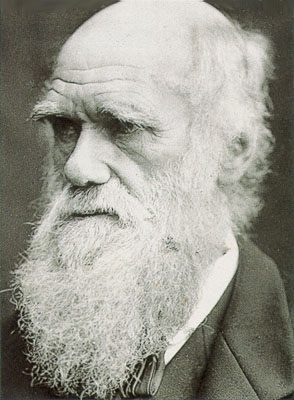
Refuting the false theology, doctrines and dogmas of Darwinism
Nito Gnoci


Linda Kimball
The presence and influence of powers, principalities, and demons in our age of apostasy into godlessness
Nihilism…All That Exists is Matter and Energy The Worldview that Caused the Collapse of Christendom and Protestant America
Revisiting Nihilism: The Will Turned Toward Evil and the Destruction of Western and American Civilization
The enemies of God, reality, truth, western civilization and our souls Linda Kimbal column
The Last Hour and the New World Order Prayer
Our Call to Battle: Rise of the Spirit of Antichrist Prayer Article: “And this is that spirit of antichrist, whereof ye have heard that it should come; and even now already is it in the world.” (1 John 4:3)
God to Mankind: NOW Do You See the Stupidity, Depravity, and Evil in Your Hearts?
Raising the New Tower-- Occult Evolution: Antediluvian, Babylonian and Modern Expressions
Psychopathy and the Western and American Tyranny of Evil Leftist Progressive Myths
Supernatural Genesis 1-11 vs. Pagan Darwinism God and Liberty or Fallen Mankind and Tyranny
Luke 21: 29-31: Some Signs Of America's Abandonment And Spiritual Bondage
Eternal Paradise Or Hell? How And Why Both Choices Are Freely Made
Luciferian Humanists: Citing the Genesis Account is Evil "Any country grounded in Judaeo-Christian values can't be overthrown until those roots are cut ... "
Who is intolerant because ashamed: Creationists or Evolutionary Theists?
Death of the Christian God in Hearts of All Humans Why America and W. Europe are Committing Suicide
THE WORLDVIEW OF EVIL SPIRITS - an article by Linda Kimball MAGICAL MYSTERY CHURCH
Pagan-Darwinian-Materialism Redoubt of Miserable Self-Deceived Non-Self Nihilists
Americas' Spiritually Dead, Deep State and Ruling Class Nihilists Walking Dead Parasitic Idolaters
Doctrines of Demons and the Modern Pagan and Pantheist Antithesis The West's Greatest Threat
Gnosis: The Main Expression of Paganized Christianity in the New Age Inner Knowing, Self-Salvation
Our Age of Malicious Perversion How Truth, Meaning, and Reality Have Been Perverted
The Serpent's Gnostic Luciferian Elite Oligarchy and Global Powers Demonic Darkness Over the West and America
The Creation Model Versus Modern Pagan Models
2 Corinthians 10:5
What Kind of God Do You Believe In?
2 Cor. 10:5 Destroying 'scientific' arguments for false Gods
Evil Spirits, Death of God, Satanic Inversion Pagan America's Reality of Madness, Demonic Bondage, and Non-Self
Judgment and Wrath The Biblical Explanation for Madness and Evil
The Worldview of Evil Spirits Revolution, Evolution, Materialism, Nihilism, New World Order, and More
Gnosis The Main Expression of Modern Paganized Christianity
America's Transformation Into A Mystical Pantheist God-State What the Death of God Has Wrought
Message to All Wearied Truthtellers: Let Isaiah Be Your Inspiration the Remnant
The Triune God, Supernatural Heaven, Souls, Hell, and Demons Do They Exist?
Teachings of Demons The Aeon of Horus, Reign of God-Men, and End of the Christian God
Revelation 2:7" ...the closing of a steel door – a solemn, cataclysmic slamming of a door."
Systemic Nihilism: End of the Human Race Eternal Damnation of Human Souls
Infernal Apocalyptic Atmosphere Over America Disintegration into nothing
Global and Ruling Class Criminal Elitists Their Ring of Power and Pact with the Spirit of Death and Hell
Blessed is the Man Who Does Not Listen to Falling Stars Who Follow After Damnable Heresies
Darwinism: An Abomination Aborting and Rotting the Church. The falling away and apostasy from the one true and personal Holy Triune Creator God has not ended
The Evil One and the Impenitent Who Receive His Mark“. And the LORD God formed man (and) breathed into his nostrils the breath of life; and man became a living soul.” Genesis 2:7
The Fall of Mankind, the Religion of Evolution, and the Antichrist. "Pride goes before destruction and a haughty spirit before a fall." Proverbs 16:18
Why Secular Liberals Actively Promote Evil. Mentally Retarded Liberals
Cultural Marxism. The Many Hidden Faces of Living Active Communism
The Devil, the Big Bang, Evolution, Extraterrestrials and the Genesis Problem
The Ascension To Power Of Misogyny. Hatred of Women
Gnostic Chiliastic Evolution: Satan's Alternative Plan of Salvation. The Great Reset
Why Proclaiming Jesus Christ the Word Became Flesh is Offensive. The Technocratic Utopian World Order
The Divine Androgyne, Pandemonium, and the Battle for Our Souls. Satan's Rising New World Order
America's Modern Pagan Oligarchy, Aztec Gods, and Human Sacrifice. Isaiah 57 Revisited
The Peace Symbol: Occult Sign Meaning Death Against Christians. Hatred of Jesus Christ and Christianity
Americas’ Spiritually Desolate, Parasitic, Ruling Class Nihilists. Satan and Powers and Principalities
Global Oligarchy, Forces of Darkness, and the Spirit of Antichrist. Forces Darkness Within Church and State
Darwinism: Idol of mind symbolizing hatred of Triune Creator God. And Logical End of America
Is the World a Computer Simulation in the Minds of Robotic Overlords? Magic Science, Transhumanists, Gnostic Physicists.
Your soul: Cost of admission to the Progressive Pagan City of Man. New Egypt, Babylon, Sodom and Gomorrah
Iron Curtain Over American Minds Progressive Marxisms’ Ideological Utopia
Satan’s New World Order Blueprint and Key Strategy. Christian Capitulation To the Serpent's Consensus Process
Chaos, Breakdown, Demoralization, Destruction: America's New Normal. How it came about and where we are going.
Demonic Darkness: America's Invisible Wave of Evil. Staring into the abyss
Cain, Marxism, Leftism and America's ruling class of 'superior' humans. The dragon they have in common
Modernist Christians in a Man-Centered Universe. Scientific Neutrality and Biblical Deconstruction
The Connection Between Baphomet and Why Researchers Are Creating Interspecies Embryos. 2 Corinthians 10:5
Isaiah 57 revisited: America's progressive pagan elites. Staring into the Abyss
Evolutionary Theism Implies That Christ is Wrong About Creation. "For if you believed Moses, you would believe Me, for he wrote about Me. But if you do not believe his writings, how will you believe My words?" John 5:46-47
Utopianism. Progressive Utopian Cultural Marxism Poisoning Minds, Churches, Schools, Politics
Acts 17:18-19-modern pagan and pantheist antithesis of the Word of God Ecclesiates 1:9 "What has been is what will be.."
Trotsky's Permanent Revolution From Hell In America. The Soviet System in America
Why Transgenderism Is Being Forced Upon America and Our Children. The Divine Androgyne
The Evil Eye Of Envy: Why Being ‘White’ Is Offensive To Some People. No Vice Worse Than Envy
Absolute Nothingness and Non-Self: The Reigning Worldview of Global Power Elites and Western Ruling Classes
What is Evil? Man-made alternative realities

Cliff Kincaid
Terrorist Attack in Baltimore By Cliff Kincaid
Moscow Terror Attack is Another KGB Operation to Fool the West
Obama’s New Nazi-Communist Alliance
On the "Days Of Rage" Planned For The 2024 Marxocrat Party Convention Some of you just couldn't believe that the formerly Democrat
(Confederate) Party had already gone totally Communist before the 1968
Party Convention
Making Russia Great Again By Cliff Cinkaid
De-Nazification and De-Communization in Russia The The mutual non-aggression Hitler-Stalin Pact, which started World War II, has been carefully “forgotten”
Climate Emergency To Produce a New World Order By Cliff Kincaid
The Next Phase of Obama’s “Permanent Revolution” By Cliff Kincaid
Evil in the White House In This War, The Enemy Is In The Ranks, Standing Right Next To You
Satanism, Communism: What's The Difference? Look To The Roots Of Communism
Fox Is the Leading "Trans" Channel There are some rather peculiar goings-on at the Fox News Channel.
Trump and His Communist Enemies The Demonized Joe McCarthy Turned Out To Be Accurate In Everything He Claimed: Fox News Is Wrong About Him And About Much More
The Five Stooges on Capitol Hill They Think We Need Even More Doped No-Hopers In The American Intelligence Community
The Biden Doctrine of Demoralization and Defeat By Cliff Kincaid
A Republican Church Committee? Do Pro-American Republicans Even Know Who Frank Church Really Was?
A Top to Bottom Housecleaning of America When we clean our house, my wife has a slogan, “Top to bottom,” meaning you have to target the whole house. The same advice applies to nations.
China's Mass Murder Experiment Phase Two
Bury The Dead And Move On Fuggedaboutit!
9/11 Truth This is the real 9/11 Truth: Our “intelligence” agencies are infiltrated.
Moving Toward Gorbachev’s “World of Communism” It's called the Monster Plot.
The Errors of Russia, the Dupes of Putin, and Another Holocaust Can The Increasingly Faithless Free World Be Saved From Russia?
World War Quietly Conquering A Distracted and Blithely Unaware World. Could it actually be Satan's world war on despised humanity?
Stand With Ukraine Against Russia and China By Cliff Kincaid
Tucker Carlson Carlson Gets His Comeuppance. Tucker's View: It is not moral for us to intervene in support of any nation's (Ukraine's) democratic self-determination and against Soviet military expansion.
The Need for Secure Borders. Have we so easily forgotten what borders are for? Have we forgotten that evil exists in the world? Have we forgotten how to keep apart from this evil?
Can Ukraine Survive Putin and Biden? Can America? Can the Free World? Can Faith in God?
The Soviet Union: Back From The Dead The Return of the Evil Empire
Could an American Surrender be in the offing with Biden at the wheel? Is this not the perfect time for Communism to strike, with Commies now governing America, China and Russia? What would Biden do?
Abortion and Communism. If you ever wondered where all the popular abortion-contraception-sexuality-perversion nuttiness came from, look to Marx's Communist Manifesto.
The Secret Life of Martin Luther King, Jr. A life almost totally at odds with his reputation as a minister of the Gospel.
"We belong to the Church militant; and She is militant because on earth the powers of darkness are ever restless to encompass Her destruction. Not only in the far-off centuries of the early Church, but down through the ages and in this our day, the enemies of God and Christian civilization make bold to attack the Creator's supreme dominion and sacrosanct human rights." --Pope Pius XII

"It is not lawful to take the things of others to give to the poor. It is a sin worthy of punishment, not an act deserving a reward, to give away what belongs to others." --St. Francis of Assisi

Truth is incontrovertible. Malice may attack it, ignorance may deride it, but in the end, there it is.—Winston Churchill

The smallest minority on earth is the individual. Those who deny individual rights cannot claim to be defenders of minorities.—Ayn Rand
Atheist Genesis:
In the beginning there was nothing, and nothing happened to nothing.And then nothing accidentally exploded and created everything.
And then some bits of everything accidentally encountered other bits of everything and formed some new kinds of everything.
And then some bits of everything accidentally arranged themselves into self-replicating bits of everything.
And then some self-replicating bits of everything accidentally arranged themselves into dinosaurs.
See?
(See The Darwinism Pages)
If you can't find the page you're looking for, try the
SITE MAP.